


In these digital pages and across our network of podcasts, we’ve covered the Amazon, Meta, Microsoft, Google and other quarterly earnings. Two that were of particular note for Q2 results were in the payments world. They’ve gone over the last year from mentioning research in Agentic Commerce to full on Agentic Commerce bullishness and Wall St. is responding.
Editorial note: As a reminder, we prefer news items that surface new data and insights. We look for both observed data (usually in the form of permissioned panel data) and stated preference data (usually in the form of survey data). We believe no one set of data is perfect, but by looking at a landscape of datapoints, together we can spot important directional trends and shifts in consumer behavior before they happen. We’ll always stated which of the above the article incorporates at the top of the coverage.
Mastercard spent its entire earnings call on agentic commerce
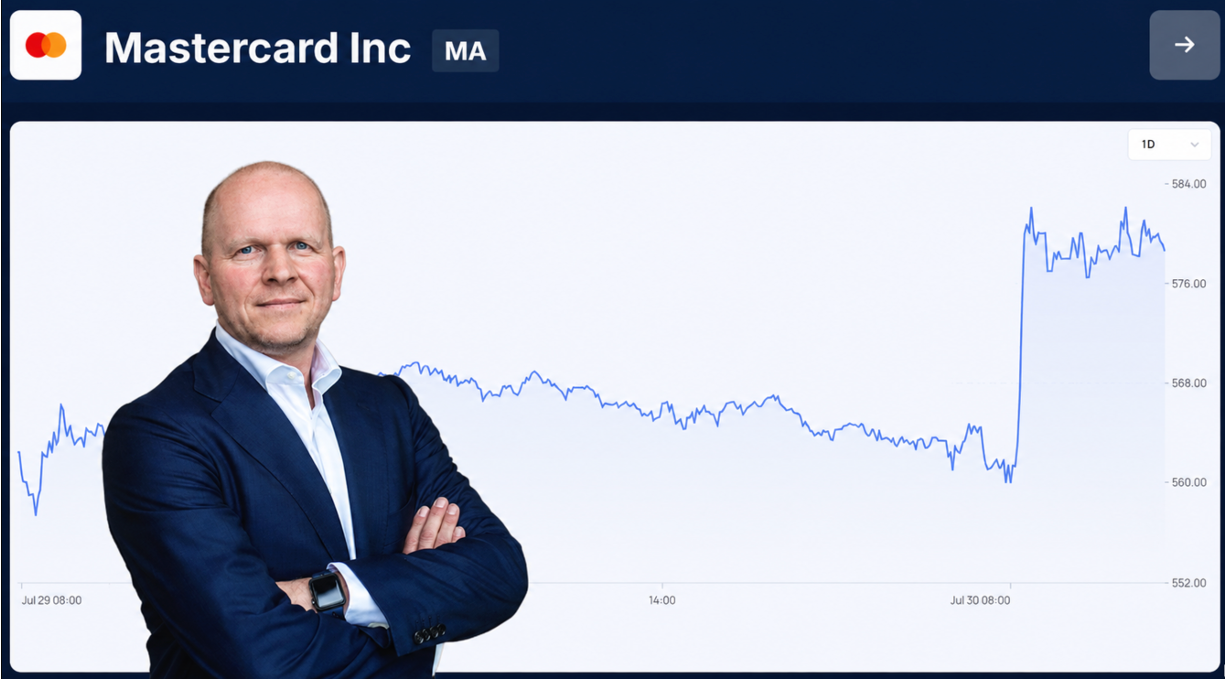
Mastercard Q2 2026 earnings call · July 30
I listen to a lot of earnings calls and have to admit that prior to this quarter, I had never listened to a Mastercard earnings call. The day after the call, my Agentic Commerce alert system went through the roof about this call so I went back and listened and was blown away about not only the density (about 80% of the call by my guess) but the enthusiasm from the tone and body language of the call around Agentic Commerce. I’ve done these calls before, these are the most forensicly reviewied and lawyered content you’ll ever hear. I could fill 5 pages with the quotes from this one, here’s the top of the top: (These are all Mastercard’s CEO Michael Miebach - bolding is mine).
"Agentic Commerce is the next evolution in payments where the importance of security, transparency and control only increase. Agentic Commerce creates a significant opportunity for Mastercard. It leads to incremental transactions and even more opportunity for our services."
"It's unique because we have additional capabilities that we put into the agent pay protocol from us, and one of them is verifiable intent, which allows you to basically challenge a transaction, say, I never wanted to buy this and then the chargeback process can kick back in. This was innovated together with Google."
"The rise of Agentic Commerce also brings about an entirely new class of payment use cases, machine-to-machine payments. This is an expansion of our addressable market and one that we are at the forefront."
Mastercard has built the chargeback path for agent purchases. You don’t build the exception path for something you think is three years out.
Their strategic framing is a virtuous cycle: more switch transactions, more data, more value-added services to attach - all extended to agent-initiated payments. And they’re explicit that they think cards prevail in an agentic world (I tend to agree, consumer behavior is increasingly stubborn to change.
→ Mastercard Q2 2026 earnings call transcript
→ Agent Pay for Machines launch release
Keep an eye on Mastercard, they are up to big things in this space and they went from more of a defensive stance with Wall St. (“We’re going to be ok guys!”) to pure offense: (“This blows up our TAM, we’re in front, we’re adding new capabilities, we’ve partnered with Google, LETS GO GUYS!”) Note: These are my interpretations not their quotes.
Visa Declares Agentic Commerce a Growth Driver
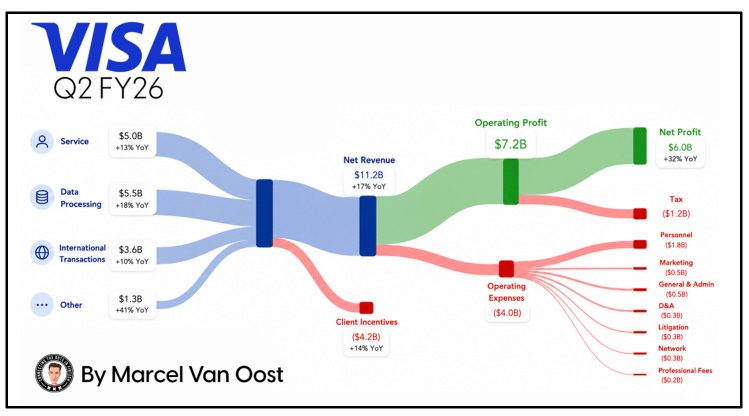
h/t to Marcel Van Oost for putting out these sweet earnings charts.
Visa also decided Q2 2026 was the time to take a similar stance.
Two networks, one quarter, on the record. Whatever you thought about the timeline before, the rails have stopped debating it.
The contrast that makes it land came three days earlier → PayPal’s new CEO published five strategic priorities and agentic commerce wasn’t one of them.
We’re seeing a big divergence from the card companies and PayPal, you can easily guess which path I think is the right one.
→ Visa declares agentic commerce a growth driver
Similarweb Clarifies What Happens After AI Recommends You…
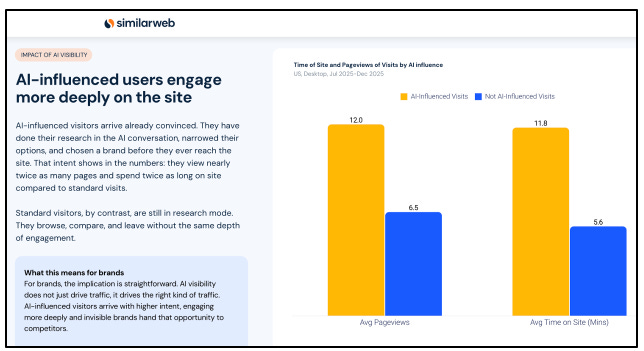
Similarweb — “The Downstream Impact of AI Visibility” · release July 12 with accompanying webinar July 16
This is observed data from Similarweb’s massive panel.
The key findings:
AI-recommended brands got 2.5x more visits within seven days.
AI-influenced visitors averaged 12.0 pageviews and 11.8 minutes on site, against 6.5 pages and 5.6 minutes for everyone else.
55.9% of that downstream traffic arrived as branded search. Only 8.8% arrived as a direct AI referral link.
That last one is the story. Roughly nine out of ten visits an AI recommendation generates land in your analytics wearing someone else’s clothes - branded search gets credited to SEO, direct gets credited to nothing. Anddd.. we’re back to the age-old attribution problem.
This all but verifies the Dark Agentic Commerce Traffic we’ve been talking about. Similarweb frames it as users coming back later. I’m sure in the panel data it looks this way, but it is not.
The companion webinar re-iterated another number we’ve seen over time: zero-click is now 65–68% of Google searches and it’s heading to 100% rapidly.
→ Similarweb — The Downstream Impact of AI Visibility
McKinsey and ICSC: US Agentic Retail Forecast: $1 Trillion
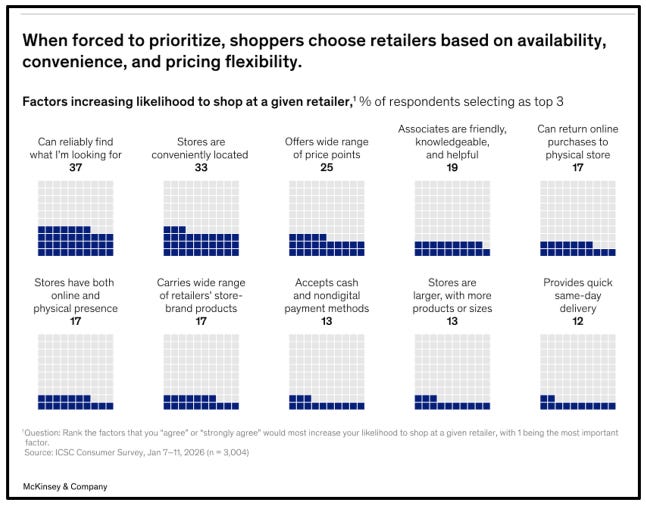
McKinsey & ICSC - “Shopping in the Age of AI: Redefining Stores for a New Era” · webinar July 13 and Shopping in the age of AI paper
McKinsey uploaded a YouTube and it’s a good watch. this data is based on stated preference from 3,004 US consumers plus C-suite interviews and their global expert network, across grocery, fashion, health and beauty, home, electronics, and food and beverage.
The headline number is up to $1 trillion in US B2C retail revenue through agentic commerce by 2030. But the stat that actually changes how you think about urgency is this one → the top decile of retailers is projected to capture more than 85% of sector economic profit.
McKinsey believes: “agentic commerce concentrates.”
The Mckinsey store paper adds:
Their convenience-versus-discovery framework is a genuinely good model - physical retail bifurcating rather than declining, with a single store unable to optimize for both missions at once. And they name the other macro forces stacked behind it: ~$100T of intergenerational wealth moving to Gen Z and millennials, and ~40% of US workers still hybrid or remote, which re-anchors shopping patterns near home instead of the office.
This bit hits home: “agents compare your store to competitors before the consumer ever leaves home, and data accuracy is table stakes”. Not only does your online catalog need to be upgraded, but you need to make sure agents looking at local inventory have access to as real-time store-level inventory as possible.
→ McKinsey — Shopping in the Age of AI
LDWW Survey: 70% of Americans are already shopping with AI
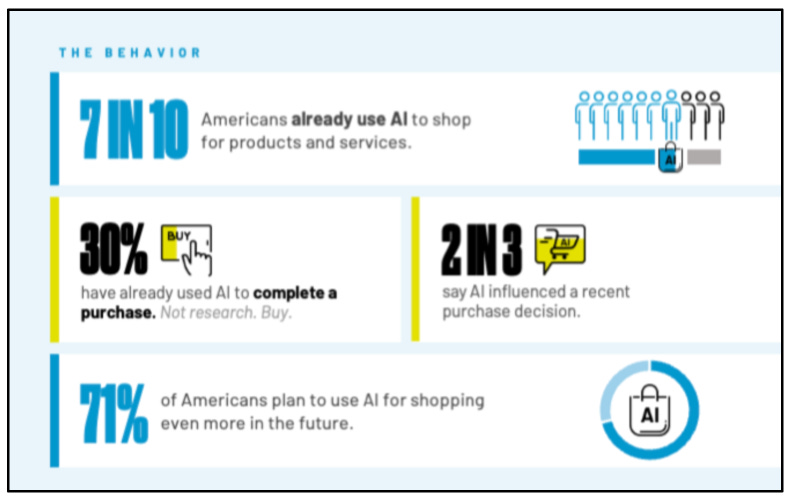
LDWW survey of 2,000 US adults - stated preference
Here’s what this survey reveals:
70% already use AI to help them shop, and plan to use it more
71% expect to increase their use in the years ahead
67% say AI influenced a recent purchase decision
30% have already bought products or services through AI, not just researched
19% say AI tools are the most trustworthy source they use to shop
Nearly one in five Americans trusts a language model more than any other shopping input they have.
→ LDWW — 7 in 10 Americans Now Use AI to Help Them Shop
Similarweb’s 2026 Gen AI Landscape
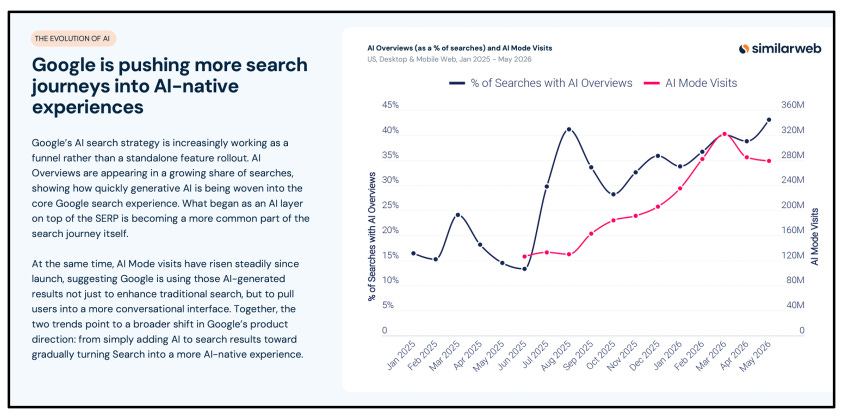
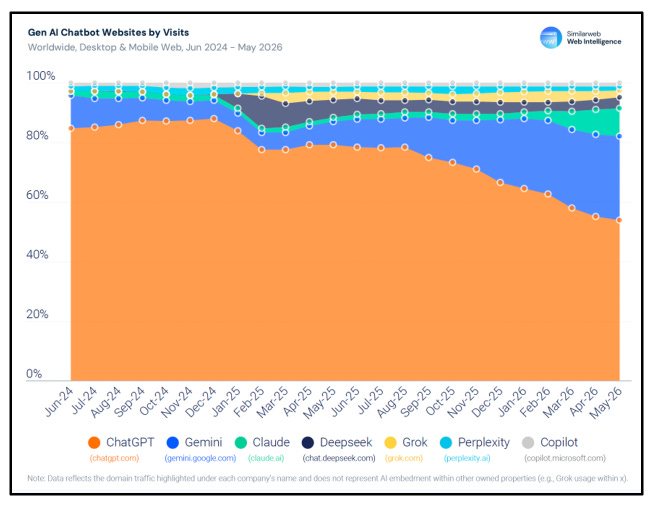
Similarweb — “Gen AI Landscape” (observed panel data)
Similarweb used to share the highlights of their panel data around GenAI monthly then stopped about 6 months ago. This is the first GenAI mega update since, and the best single map of where AI search traffic is actually going.
The two charts are the tip of the iceberg, here’s the Alexa shopping data for example:
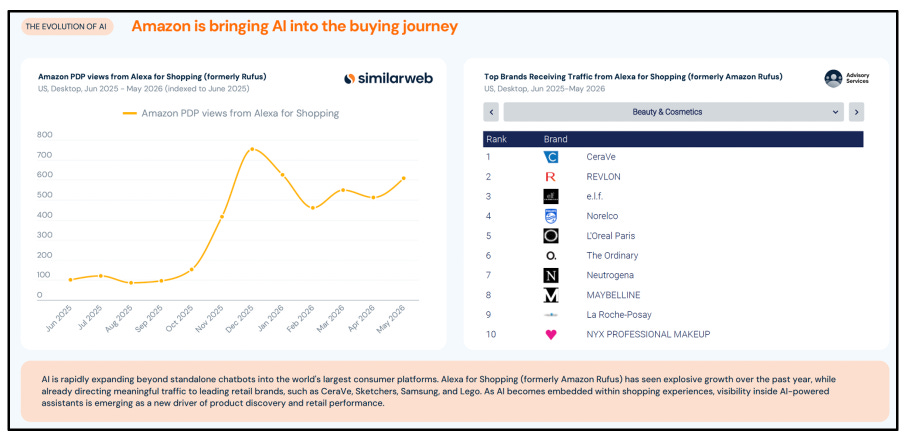
→ Similarweb — 2026 Generative AI Landscape
Gener8’s AI Landscape
Speaking of panel data, Gener8 sits on a big panel dataset and the July analysis has some genuinely interesting trends from the data:
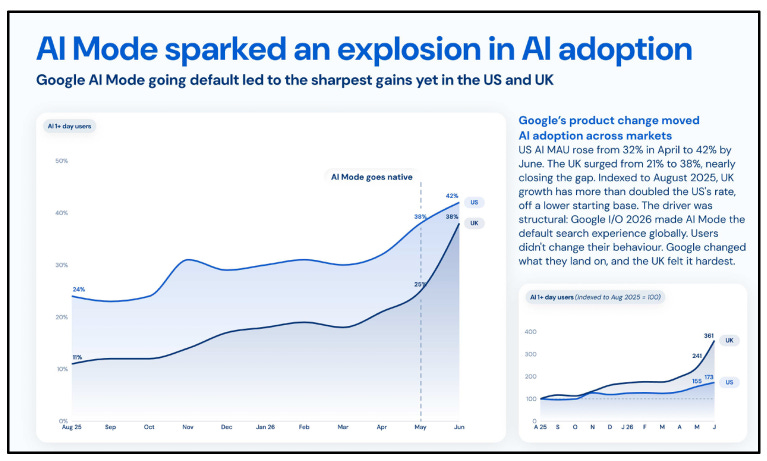
(Note: I’m not sure what they mean by AI Mode being the default, that is not the case at least in the US), but they are making it increasingly easy to hit the ai mode button.

That’s the End to July 2026
As we head to the end of Summer and beyond not only is the information’s going to be coming out fast and furious, but the big answers engines have been quietly building and I predict we’re going to have a bunch of news after Labor Day so buckle up, it’s going to get busy.