


Adobe is out this am with an update to their AI Traffic data and we have a complete analysis. then, for the first time they have released AI Visibility data that is an urgent reminder of the importance of ACO. Let’s dig into the AI traffic/retail traffic trends first…
Adobe AI Traffic Data Update
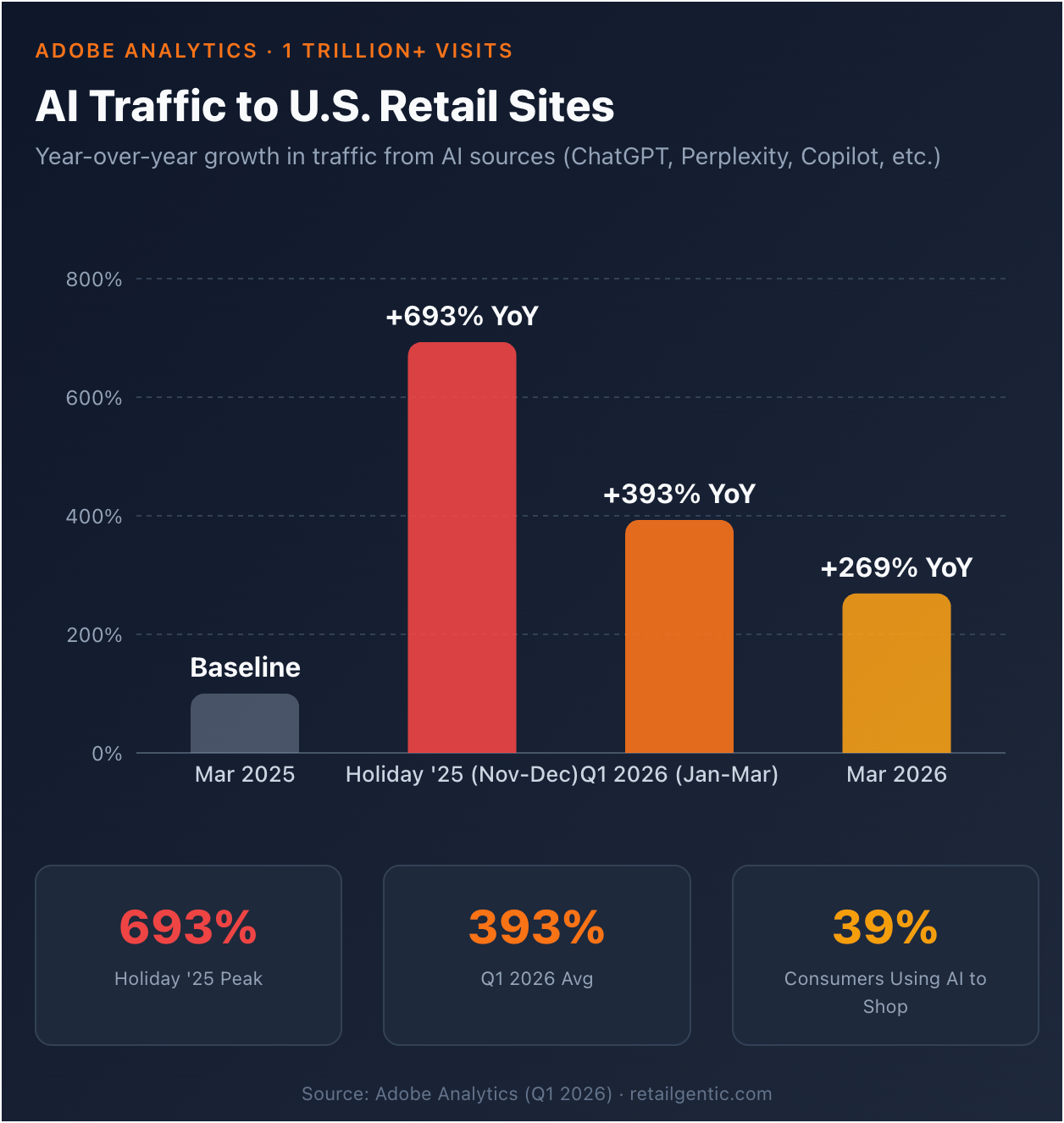
In Q1 2026, Adobe reports traffic from AI sources to U.S. retail sites jumped 393% year over year. In March alone, it was up 269%. As a reminder, during the November-December 2025 holiday period, AI traffic surged 693%.
That’s the top-line number, when you dig deeper, it gets better.
The Great AI Conversion Flip
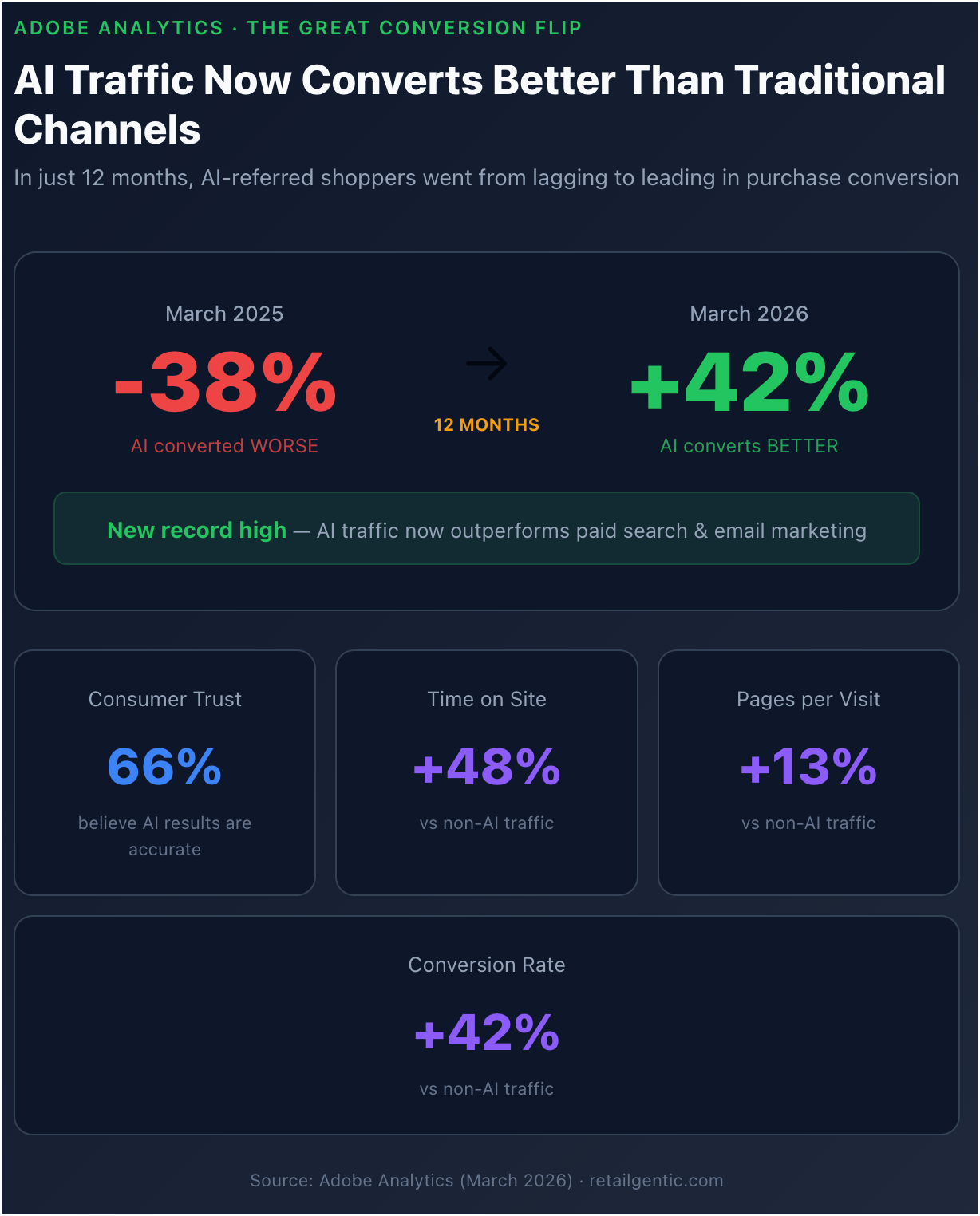
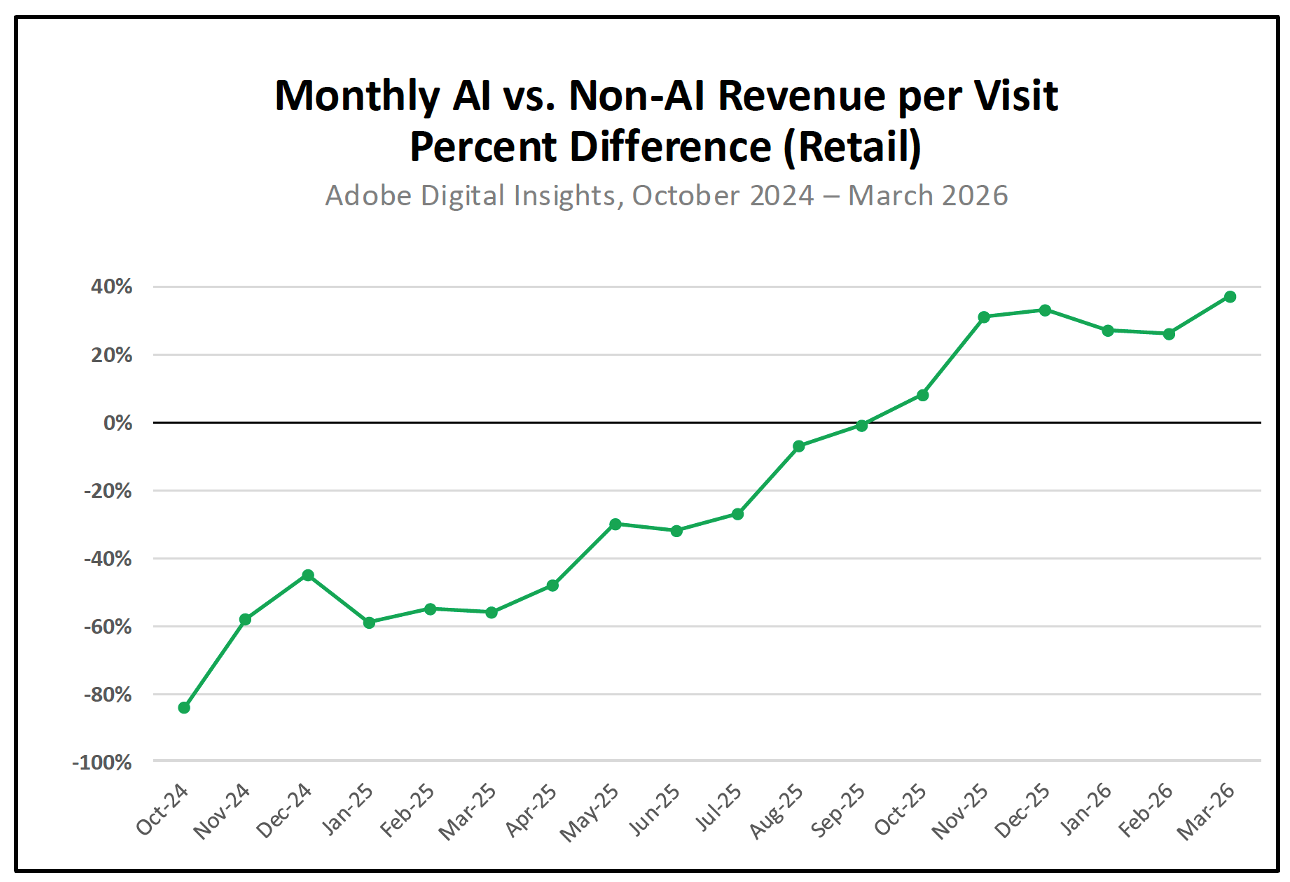
As of March 2026, AI traffic is converting 42% better than non-AI traffic (paid search, email marketing, affiliates, etc.). That’s a new all-time record in the Adobe data!
To understand the historical implications of this datapoint, if we look back at March 2025, AI graffic converted 38% worse than traditional channels. That’s an 80-percentage-point swing in conversion in 12 months 🤯.
What’s driving this surge in AI conversion?
Another trend we’ve been tracking for a year is the trust relationship between Answer Engines and shoppers.
Adobe’s companion shopper survey (5,000+ U.S. respondents) found that 66% of consumers believe AI tools provide accurate results. And 39% say they’ve already used AI for online shopping, with 85% saying it improved their experience. When shoppers trust the AI recommendation, they buy.
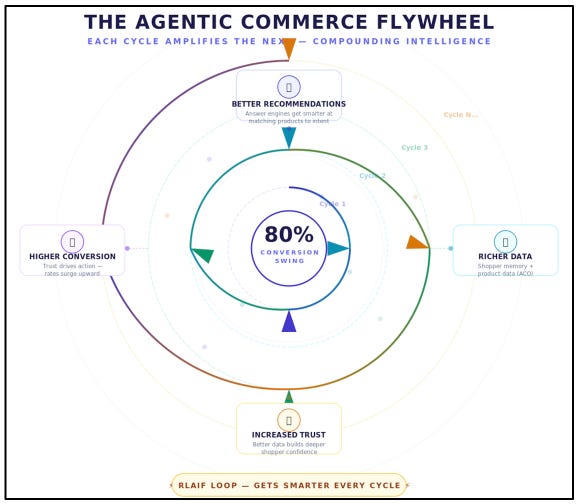
Only one thing can explain this 80% swing in conversion rate - an Agentic Commerce flywheel -
Answer engines are getting better at recommending products
Because they have better shopper data (memory) and product data (ACO)
Better shopper/product data is increasing trust
More trust increases conversion rates, that closed ‘re-enforcement learning with AI Feedback (RLAIF)’ loop gets smarter and smarter
The result: an unprecedented 80% swing in conversion rate in one year.
Agentic Coding (Codex/Claude Code) use a similar RLAIF closed-loop flywheel system, but they’ve been at it longer and we’re in the phase where each ‘spin’ of the flywheel is creating huge gains in capabilities. New models (Mythos+SPUD) will even further elevate this. In 6 months we could see another 40-60% improvement in conversion.
Sidebar: Life on the Exponential Growth Curve
Like many of you, I’ve been in ecommerce for over 20yrs. We’ve experiences periods of growth like this in the early days of ecommerce and then it slowed dramatically - the standard ‘rule of large numbers’. Even Amazon has succumbed to this rule. That’s what our brain tells us is going to happen.
But it’s different this time. What’s happening now is we have just seen clear evidence two key factors of ecommerce are simultaneously growing (traffic and conversion) and one of them, conversion-rate is accelerating. We’ve never seen a RLAIF flywheel before. This is new territory.
The improvement we are seeing across AI happens when not only does one factor improve rapidly, but 2,3 even 4 factors all improve at the same time. When you multiple these you get an exponential curve.
Exponentials are hard to predict because they accelerate when we’re used to the ‘law of large numbers’ kicking in, they create surprising, even shocking results. Failure to realize you are on an exponential and you don’t invest in front of it can have faster and more severe ramifications than we’ve ever seen.
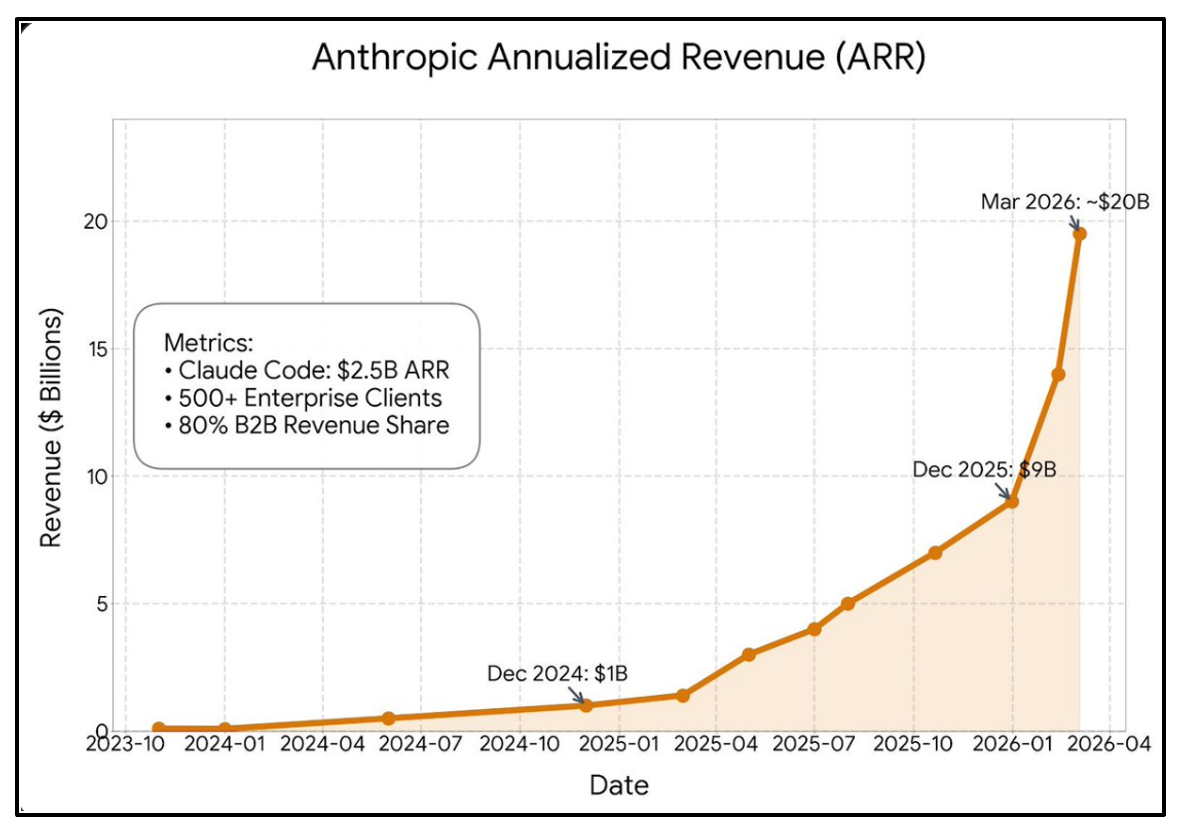
I know, I know, that experience we all have makes it hard to imagine something like this. Here’s a real-world example happening right now - using the exact same RLAIF flywheel→
PLUS: AI Shoppers Are Better Shoppers
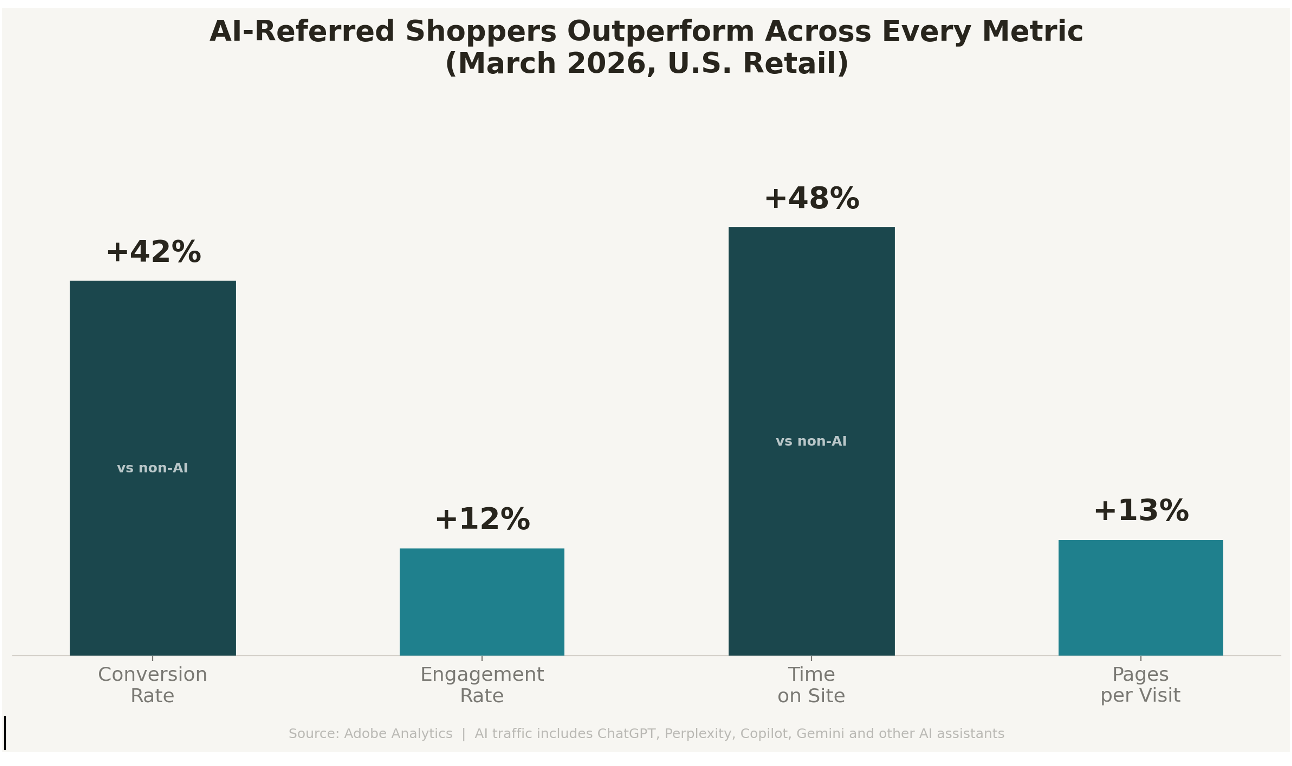
Not only are traffic and conversion rates growing at a frenetic pace, but the Adobe data reveals 3 more factors that are more evidence we’re on the exponential":
It’s not just conversion. Adobe’s March 2026 data shows AI-referred visitors outperform across the board:
+42% higher conversion rate vs. non-AI channels
+48% more time spent on site
+13% more pages viewed per visit
+12% higher engagement rate
Now let’s look at the new data in this report - US Retail AI Visibility:
Adobe US Retail AI Visibility Data
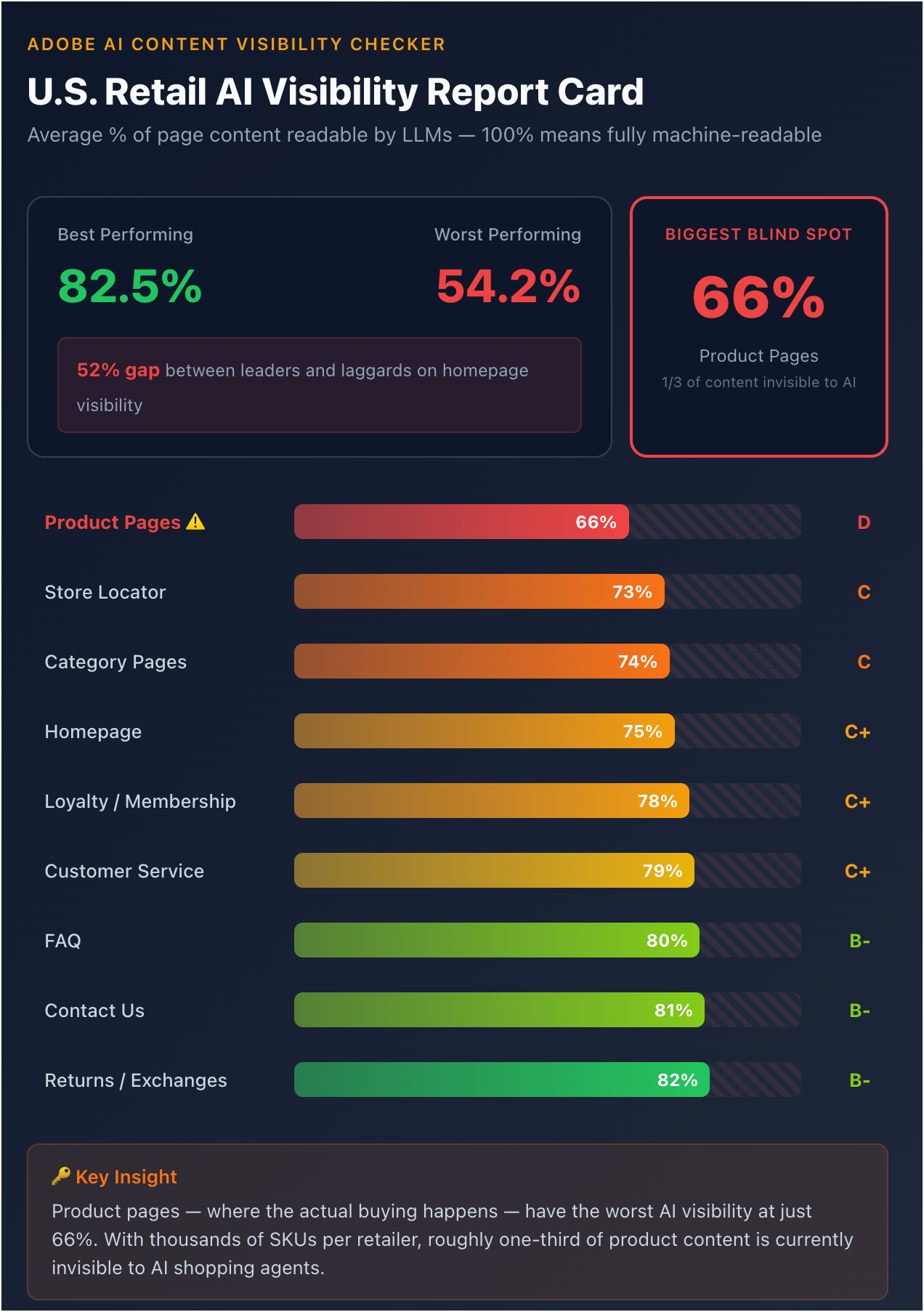
The scorecard above shows the average score across the entire retail sector using Adobe’s proprietary new AI Visibility data. We assume they are looking for the basics on each of the pages of a website: bot blocking, page readability, metadata for javascript-hidden content, etc and then rolling them up, by category, into this report-card style scoring.
Here you can see the top performing pages are Returns/Exchanges, Contact Us and FAQ all above 80% - these are typically text-heavy pages so this makes sense.
In the 70-80% zone we have: customer service, loyalty/membership, homepage and cateogry pages.
Finally, the most plentiful pagesof any ecommerce site, the PDP, scored a terrible 66%!
Adobe Data Reveals: The Invisible Shelf
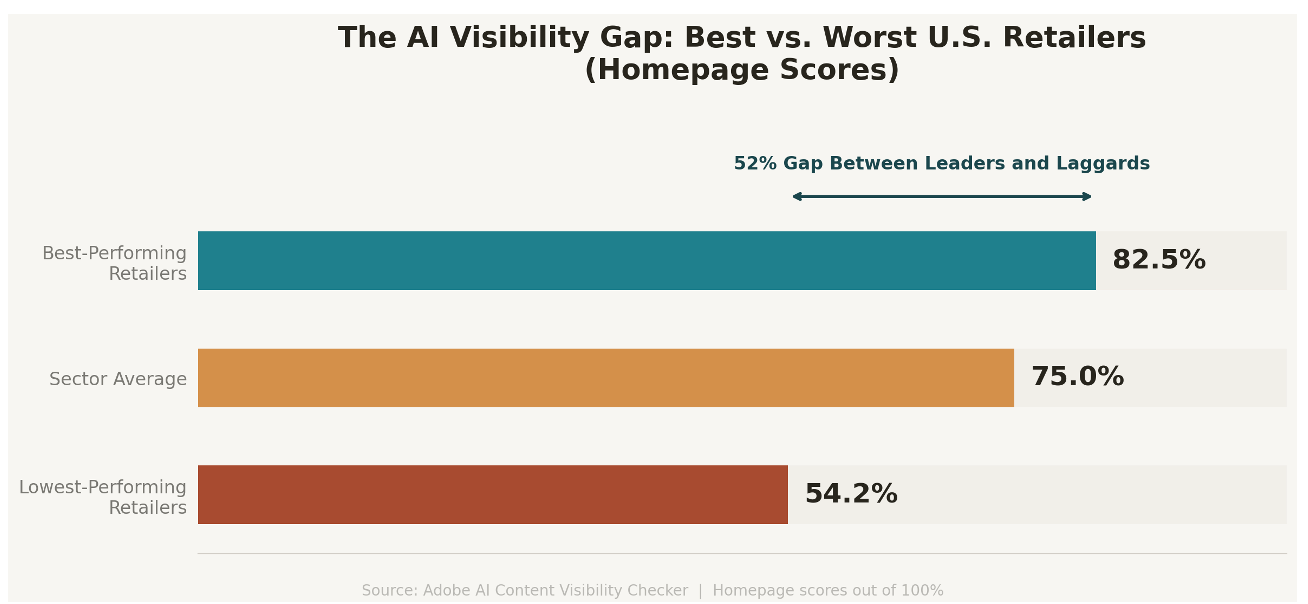
In the visibility data, Adobe doesn’t reveal the range of outcomes for the PDPs, but for homepages at 75%, they do show the lowest performing retailers are as low as 54.2% and the highest at 82.5% - that’s a ~28% swing. Homepages are pretty basic and other than product carousels they tend not to be javascript heavy.
I’m sure in future reports we’ll see it, but my educated guess here is the range of outcomes is at least 2X from homapages - that’s a 56.6% swing with a midpoint of 29.3% - that would mean PDPs are as low as 37.7% with the midpoint at 66%.
This pencils with what we see at ReFiBuy - we frequently talk to retailers and brands that are still blocking the core 6 Agentic Commerce Engine crawlers at an infrastructure level and there’s an organizational disconnect between the business/legal and IT/MIS around their priorities and where AI fits in.
Critical Action Item for Q2/Q3: ACO!
Since 9/25 here in the virtual pages of Retailgentic, we’ve been advocating for something we coined: Agentic Commerce Optimization. We released our 9-step framework:
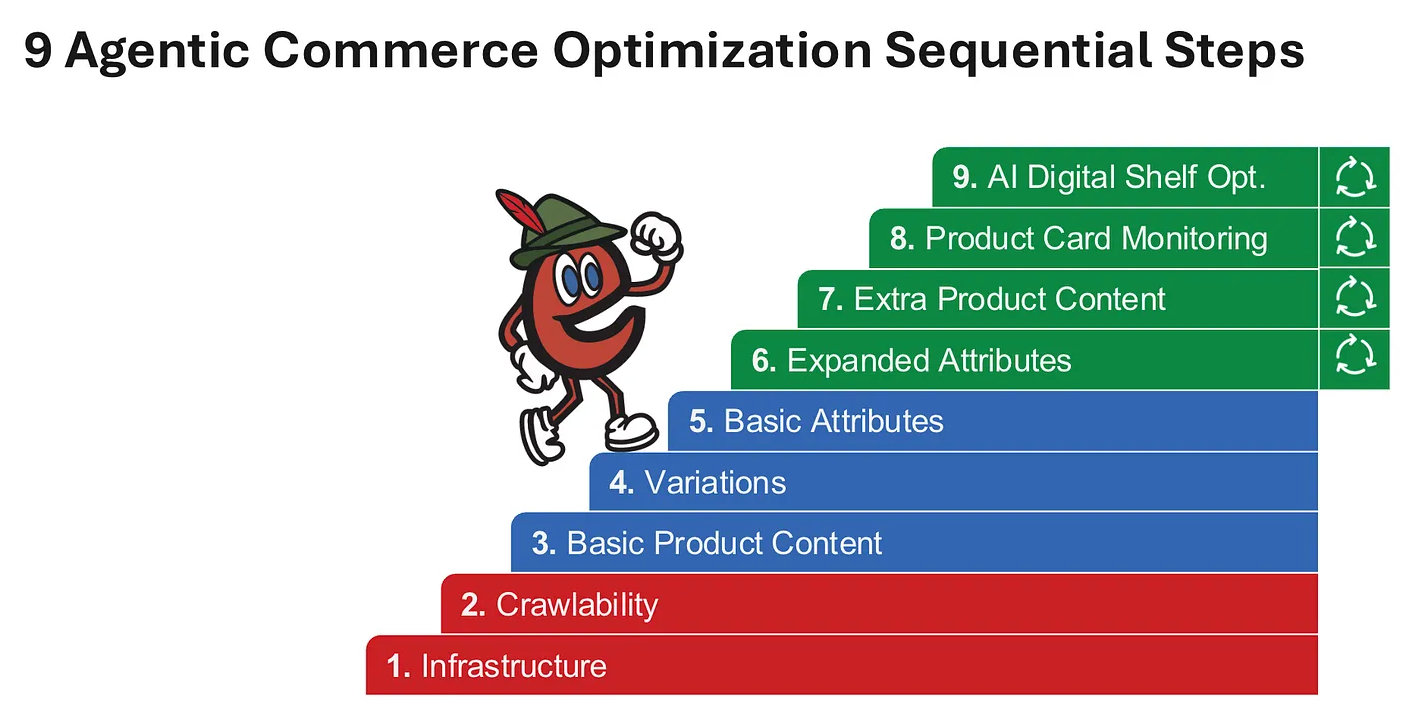
Back in September of 25, this was a ‘prepare for the future’ type scenario. Sitting here in April 2026 staring at Holiday 26 bearing down at us with AI traffic surging 393% y/y and conversion rates on that traffic swinging +80%. In 8 months, ACO has moved to a ‘must have’.
Note, we also have this updated and expanded ACO guide here.
Conclusion
In real time, we’re watching the internet get re-intermediated. Google built a $200B+ business as the intermediary between shoppers and brands. Now Answer Engines are becoming the new intermediary — and unlike Google, they don’t just give you a list of blue links. They make recommendations. They pre-qualify. They hyper-compress the funnel.
Adobe’s new data makes the economic case undeniable: AI traffic converts better, engages more, and is growing nearly 4x YoY. But here’s the twist — only the retailers who invest in their product catalog, optimize their product cards and start providing extra context to engines, and get on their own RLAIF curve will ride this wave vs. missing out on the biggest opportunity since the dawn of ecommerce. 🚀