

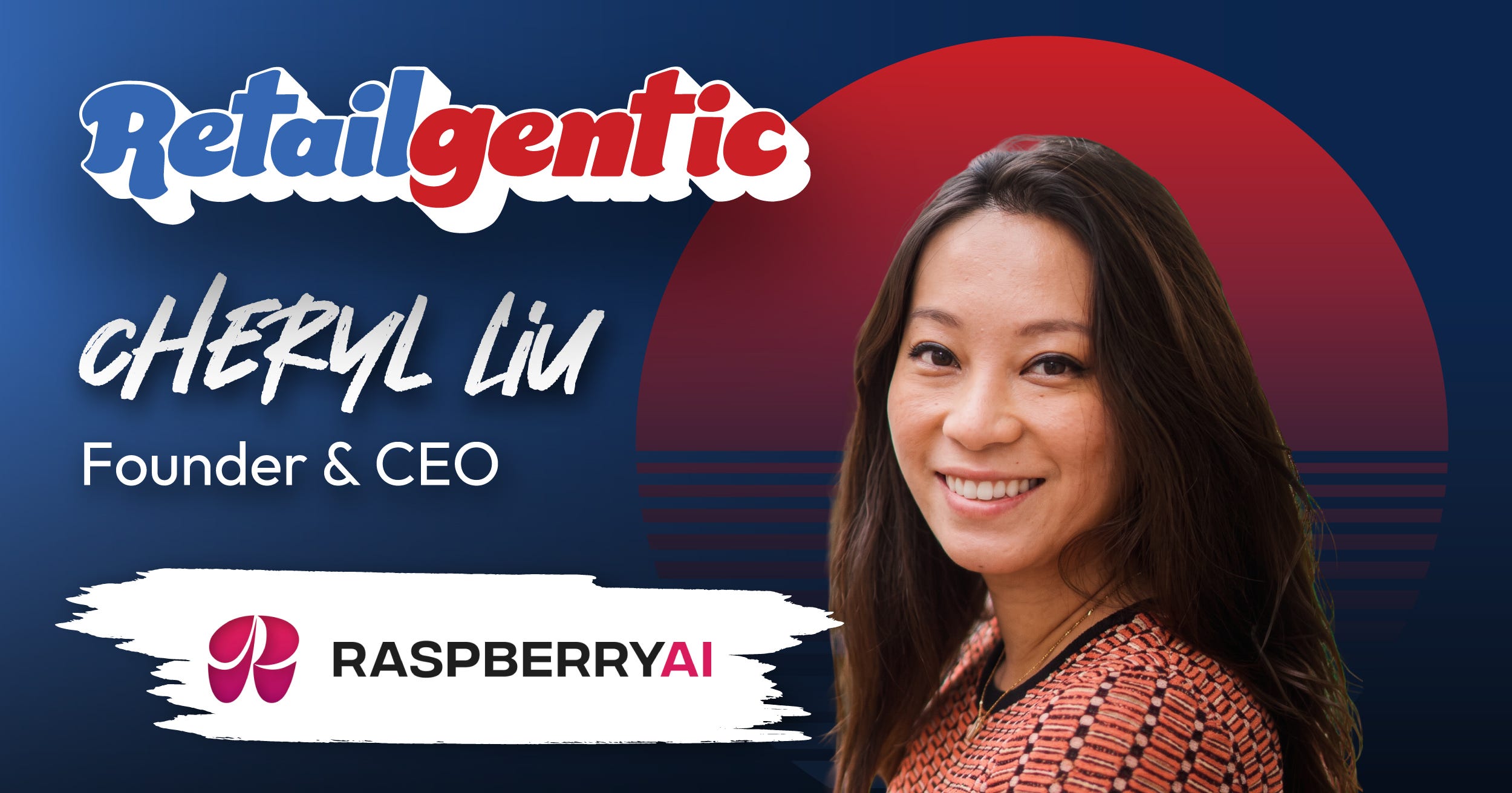
Cheryl Liu is the founder and CEO of Raspberry AI, a generative AI platform for designing physical products, used mostly in fashion and increasingly in home, furniture, luggage, jewelry and beauty.
Cheryl’s career covers both retail and tech. She started at the private equity firm KKR, investing in consumer retail companies such as the big mall-based chains as they moved online and omnichannel. That’s where she learned how products actually get made. She then moved into tech: AWS, where she worked on machine learning instances back when self-driving car companies were the big GPU buyers; DoorDash; and a Series D e-commerce startup, bringing machine learning into decision-making at each one. She came out of Stanford, and Raspberry has now raised a $23 million Series A led by Andreessen Horowitz.
Listen/Watch Our Interview:
About every six months on Retailgentic, we step away from the front end of agentic commerce to look at how AI is changing a different part of the retail stack. This week it’s product creation. Raspberry AI helps fashion brands and other retailers visualize, test and sell products before a physical sample exists. It’s part founder story and part look at what happens downstream when making products gets that fast.
Highlights
𝟭𝟱% 𝗵𝗶𝗴𝗵𝗲𝗿 𝗰𝗼𝗻𝘃𝗲𝗿𝘀𝗶𝗼𝗻: Raspberry measured 15% higher conversion on AI-generated e-commerce PDP imagery than on traditional photo shoots, at 80% to 90% lower cost. Cheryl thinks video and personalized content could push that to 25% within a year.
𝟭,𝟰𝟬𝟬 𝗶𝗻, 𝟰𝟱 𝗼𝘂𝘁: Wholesale brands walk into a Nordstrom or Bloomingdale’s buy meeting with 1,400 products and get 45 adopted. “1,400 products did not need to be created at all.”
𝟮.𝟯𝘅 𝘁𝗵𝗲 𝗗𝗶𝗰𝗸’𝘀 𝗼𝗿𝗱𝗲𝗿: One of the world’s largest sportswear companies changed products and styling live in front of the CEO of Dick’s Sporting Goods and came away with 2.3x the order. Across wholesale customers, orders are up 1.5x to 2.5x.
𝟭𝟮–𝟭𝟴 𝗺𝗼𝗻𝘁𝗵𝘀 𝘃𝘀. 𝟯–𝟭𝟰 𝗱𝗮𝘆𝘀: Most fashion brands take 12 to 18 months to get from a designer’s idea to a product you can buy. The fastest players get that down to three to 14 days.
𝗜𝗺𝗮𝗴𝗲 𝗲𝗻𝗴𝗶𝗻𝗲 𝗼𝗽𝘁𝗶𝗺𝗶𝘇𝗮𝘁𝗶𝗼𝗻 (𝗜𝗘𝗢): After SEO and GEO, Cheryl’s next frontier is measuring which angles, models and lighting convert for each brand. For some men’s brands that’s flat lays. For women’s brands it’s on-body.
𝟰𝟲𝟬 𝗯𝗿𝗮𝗻𝗱𝘀 𝗶𝗻 𝟮.𝟱 𝘆𝗲𝗮𝗿𝘀: Raspberry has been selling for about two and a half years and works with 460 brands. 70% of clients use it in three or more departments, most often design, e-commerce and marketing.
𝗙𝗼𝘂𝗿 𝘄𝗲𝗲𝗸𝘀 𝗲𝗮𝗿𝗹𝘆: One of the world’s biggest retailers had never turned in private-label design specs on time in 20 years. With Raspberry, they turned them in four weeks early.
𝗕𝘂𝗶𝗹𝘁 𝗳𝗼𝗿 𝗰𝘂𝘁-𝗮𝗻𝗱-𝘀𝗲𝘄: Raspberry trains its own models for fabric, drape and physical feasibility, and generates the tech packs factories need. “At the end of the day, someone has to cut and sew that.”
Cheryl calls it starting at the end: show the finished product before doing the work. We loved this one, and we’ll have her back once she’s built more of the future she described. Enjoy the conversation.
🎧 Listen wherever you get your podcasts: Spotify, Apple, etc.
Or, we have a video version on YouTube (make sure to subscribe!) →
Want to Learn More?
Stay on top of what’s happening in agentic commerce, from the tools powering it to the founders building with it by following us across platforms:
Podcast: https://retailgentic.transistor.fm
Instagram: https://www.instagram.com/retailgentic/
We're here to make sense of what’s next in retail + AI and bring you along for the ride. Subscribe and stay tuned!
1,400 products in, 45 adopted is the line I'll remember. AI makes designing cheap. Choosing what deserves to exist is the hard part, and nobody's automated the buyer's raised eyebrow.