

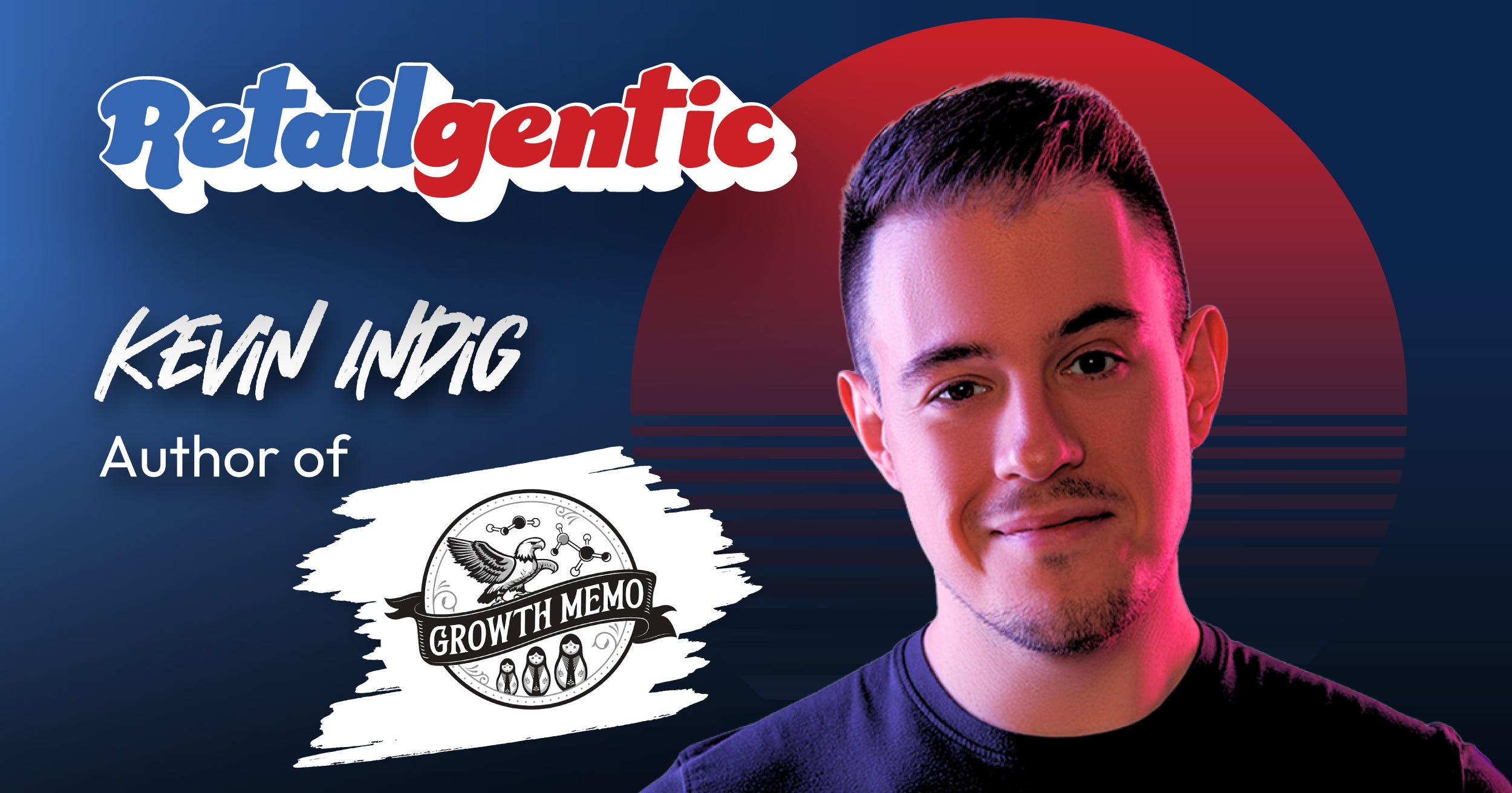
Kevin Indig is the author of Growth Memo a weekly Substack on growth, SEO, and AI visibility. He comes from the SEO world and has spent more than 15 years in the space. For the last four years he’s advised fast-growing tech companies, including big names like Meta, Reddit, and Ramp as well as smaller startups across commerce and SaaS. Before that, he led a large part of the growth team at Shopify, so his roots in e-commerce go deep.

These days he’s often the person companies call in when growth stalls and they need a turnaround plan. He also runs a series of user-behavior studies on how everyday US adults shop in AI mode and ChatGPT.
Listen/Watch Our Interview:
This week is a research-heavy episode with a conversation of one of the sharpest observers of how real people search and shop now that AI sits between them and the products they want. Kevin’s user-behavior research helped inspire our own product card study at ReFiBuy, so we’ve wanted to have him on for a while.
Highlights
𝗧𝗵𝗲 𝘀𝗵𝗼𝗿𝘁𝗹𝗶𝘀𝘁 𝗲𝗳𝗳𝗲𝗰𝘁: Over 88% of participants in Kevin’s user-behavior studies didn’t question the frame from AI. “When AI says, ‘These are the best X,’ people barely question it.”
𝗧𝗼𝗽 𝗼𝗳 𝘁𝗵𝗲 𝗹𝗶𝘀𝘁 𝘄𝗶𝗻𝘀: Almost 75% of people picked the item at the top of the shortlist. The top-heaviness of classic Google search carries straight over into AI mode.
𝗢𝗻𝗹𝘆 𝟯% 𝘃𝗲𝗿𝗶𝗳𝘆: In a ChatGPT study, only 3% of people checked the shortlist anywhere else on the open web: not publishers, not affiliates, not YouTube.
𝗧𝗿𝘂𝘀𝘁 𝗶𝘀 𝘁𝗵𝗲 𝘀𝗵𝗼𝗿𝘁𝗰𝘂𝘁: The one thing that breaks the pattern is a brand the shopper recognizes and trusts. Show up as Nike in position five and people who trust Nike will pick you over the #1 item.
𝗧𝗵𝗲 𝗿𝗲𝘀𝗲𝗮𝗿𝗰𝗵 𝗯𝗲𝗵𝗶𝗻𝗱 𝗶𝘁: Five user-behavior studies over roughly 24 months, with 100+ participants and 400+ tasks. Every click, hover, and scroll was recorded, and participants talked through what they were thinking.
𝟵𝟲% 𝗰𝗮𝗿𝗼𝘂𝘀𝗲𝗹𝘀: Kevin analyzed 4,000+ shopping queries on regular Google (not AI mode). Over 96% showed at least one product carousel, and when one appears, click-through on classic blue links drops by at least 50%.
𝗔𝗱𝘀 𝗶𝗻 𝗱𝗶𝘀𝗴𝘂𝗶𝘀𝗲: Google shows more ads, bigger ads, and ads that are harder to tell apart from organic results. “I’ve been in this space for over 15 years. I more and more accidentally click on ads.”
𝗤𝘂𝗲𝗿𝘆 𝗳𝗮𝗻-𝗼𝘂𝘁𝘀: AI engines run live searches on anywhere from two to hundreds of keywords before they answer. Ranking better on those fan-out queries has repeatedly increased citation rates and AI visibility.
𝗠𝗲𝗿𝗰𝗵𝗮𝗻𝘁 𝗖𝗲𝗻𝘁𝗲𝗿 𝗼𝘃𝗲𝗿 𝗦𝗲𝗮𝗿𝗰𝗵 𝗖𝗼𝗻𝘀𝗼𝗹𝗲: Google’s Merchant Center now says more about how products show up in AI than Search Console does, which is why Kevin calls commerce the beachhead for AI optimization.
𝗧𝗵𝗲 𝗼𝘃𝗲𝗿/𝘂𝗻𝗱𝗲𝗿: For AI-assisted product research, Kevin takes the over on 10–20% of shoppers. For fully agentic checkout, he expects under 1% over the next 12 months.
Kevin is one of the best at separating what the data says from what the hype says. Subscribe to Growth Memo after you subscribe to Retailgentic, and enjoy the conversation.
🎧 Listen wherever you get your podcasts: Spotify, Apple, etc.
Or, we have a video version on YouTube (make sure to subscribe!) →
Want to Learn More?
Stay on top of what’s happening in agentic commerce, from the tools powering it to the founders building with it by following us across platforms:
Podcast: https://retailgentic.transistor.fm
Instagram: https://www.instagram.com/retailgentic/
We're here to make sense of what’s next in retail + AI and bring you along for the ride. Subscribe and stay tuned!
If 75% take the top pick and only 3% check the open web, the shortlist is effectively the shelf now. The merchant-side test I'd add is to ask ChatGPT for the shortlist in your category, then fetch your own product pages as ChatGPT-User and see whether price and availability actually come back. If they don't, the brand trust that lets Nike win from position five never gets a chance to work.