

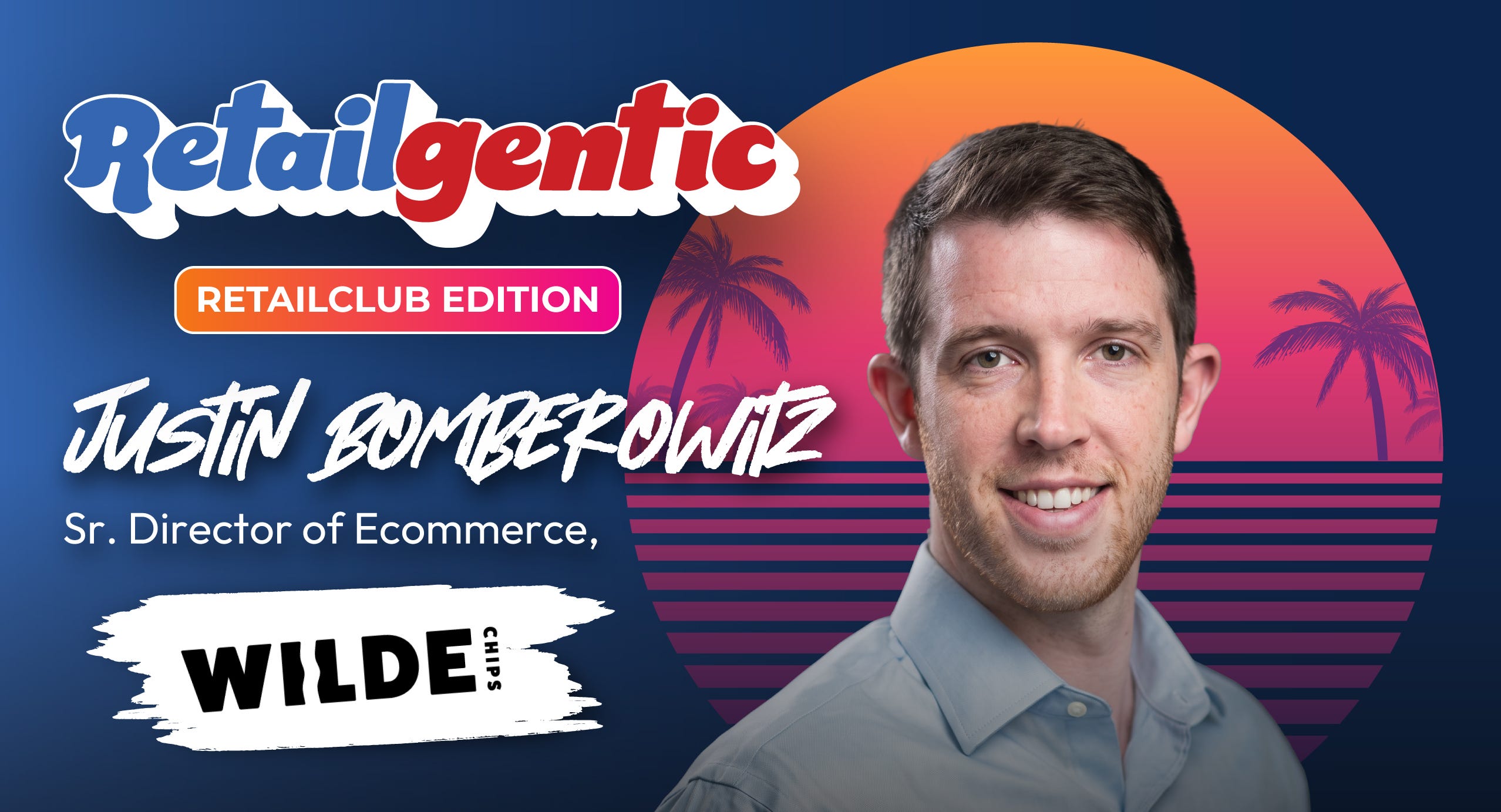
Justin Bomberowitz is Senior Director of E-commerce at Wilde Brands, the company behind chips and crackers made from chicken breast. Justin has made a career of joining challenger snack brands right as they’re ready to break out, with stints at SmartSweets, PopCorners, and Ocean Spray, plus consulting work for giants like P&G and Mondelez. These days his job reaches well beyond e-commerce, into operations, media, and the full digital path to purchase. He’s also the person at Wilde building the AI agents.
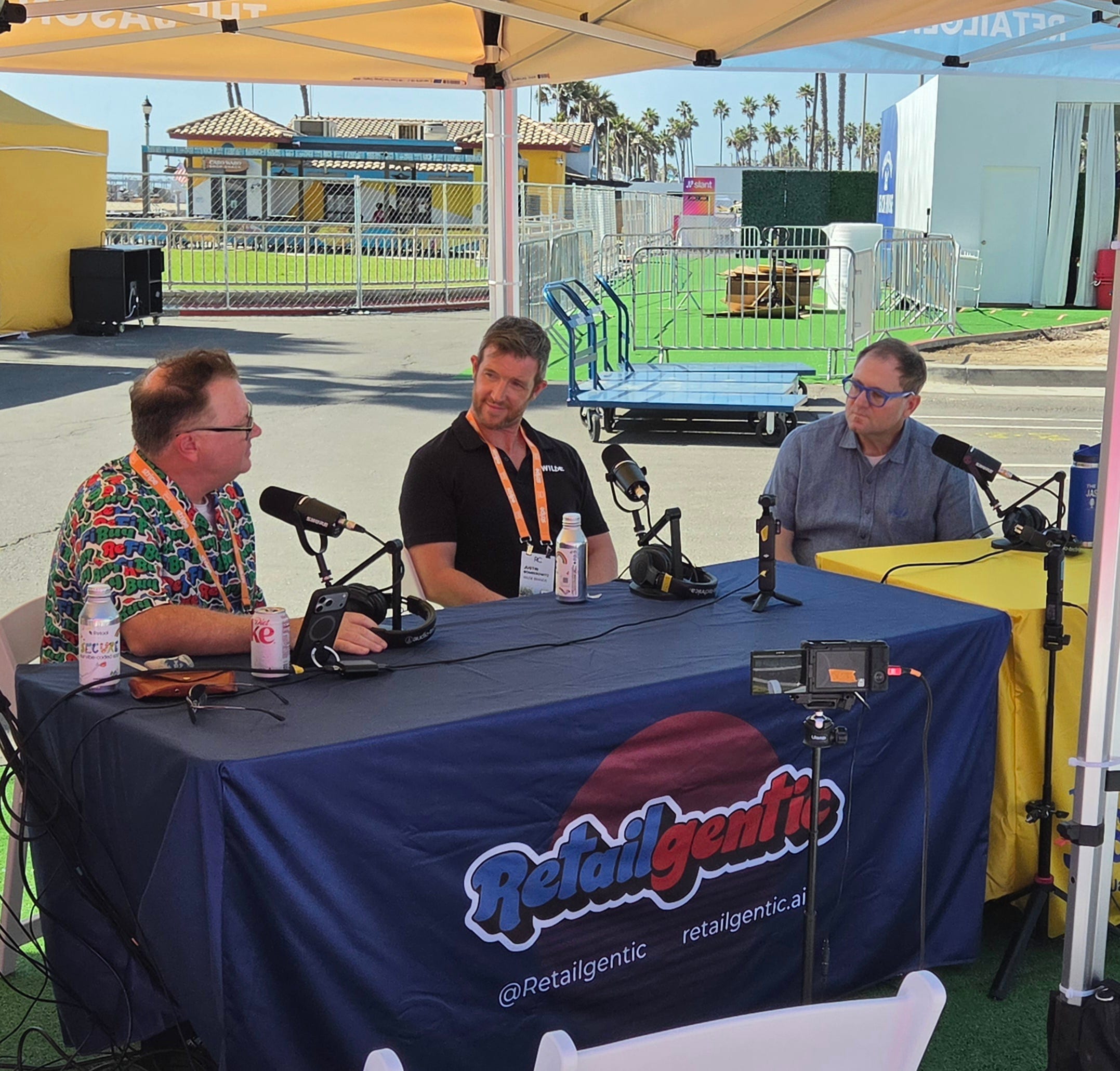
This episode was recorded live at the RetailClub AI Festival in Huntington Beach (Sept 22–24), where Jason Goldberg and I set up shop to record with retail and e-commerce leaders between sessions. You’ll hear a few nods to the festival in the conversation, and if there’s a little extra crunch in the audio, blame the snacks.
Listen/Watch Our Interview:
We start with a quick tour of every CPG brand Justin has worked for, and the very scientific method he uses to pick the next one. From there it turns into a crash course in how challenger brands actually grow: the brutal economics of the physical shelf, why big brand houses are reshuffling their portfolios, and what it really takes to get into Costco and stay there.
There’s also a snack reveal and a crunch our audio engineer will never forget. Hit play.
Highlights
𝗧𝗵𝗲 𝘀𝗵𝗲𝗹𝗳 𝗶𝘀 𝘇𝗲𝗿𝗼-𝘀𝘂𝗺: “We haven’t added any square footage into a shelf.” When an emerging brand earns its way in from the innovation aisle, something else has to come out.
“𝗜 𝘄𝗮𝘀 𝘄𝗿𝗼𝗻𝗴”: A year ago Justin would have said TikTok Shop would never be a main part of his job. Then came “a tsunami of interest,” and today Wilde runs live selling on TikTok Shop and Whatnot.
𝗧𝗵𝗲 𝗖𝗼𝘀𝘁𝗰𝗼 𝘁𝗵𝗿𝗲𝘀𝗵𝗼𝗹𝗱: Landing a Costco rotation is the moment brands post the hype video. If you miss the sales threshold, you don’t get a repeat, and the regional buyers talk to each other.
𝗦𝗽𝗲𝗲𝗱 𝘀𝗲𝗹𝗹𝘀: “Conversions go up the faster you get delivery.” Justin says ship-from-store is the fastest-growing part of Walmart digital, and if your product isn’t in that store, the conversion you paid Walmart Connect for disappears.
𝗘𝘃𝗲𝗿𝘆 𝘀𝗮𝗹𝗲, 𝗲𝘃𝗲𝗿𝘆 𝗭𝗜𝗣 𝗰𝗼𝗱𝗲: With two years of Amazon sales mapped by ZIP code, Justin can see that barbecue over-indexes in the Southeast and sea salt and vinegar in the Northeast. With AI, building creative for those regions is now quick.
𝗢𝗻𝗲 𝗰𝗲𝗻𝘁𝗿𝗮𝗹 𝗻𝗲𝗿𝘃𝗼𝘂𝘀 𝘀𝘆𝘀𝘁𝗲𝗺: Instead of building agents on top of separate data silos, Wilde built a data lake. Target store data, Roundel media, Shipt, Instacart, and DoorDash data all sit in one place, so a sales lead can ask a small language model what to do next.
𝗧𝗵𝗲 𝗽𝗿𝗼𝗺𝗼-𝘄𝗮𝘁𝗰𝗵𝗶𝗻𝗴 𝗮𝗴𝗲𝗻𝘁: When a retailer’s promotion drops a price on Instacart, one of Justin’s agents spots it through the API and flags it. He then decides whether to push ads to new-to-brand shoppers or pause them for 30 days and let the promo do the work.
𝗨𝘀𝗲 𝘁𝗵𝗲𝗺 𝗮𝗹𝗹: Justin builds mostly in Claude but stays LLM-agnostic, trying Grok, Muse, Kimi, and NVIDIA’s open models. “Don’t let your frame just get put into one.”
𝗗𝗼𝘇𝗲𝗻𝘀 𝗼𝗳 𝗮𝗴𝗲𝗻𝘁𝘀: “I have dozens of agents that I’m working with. That is the new norm.”
I learned more about how CPG actually works in 30 minutes with Justin than I have in years of nodding along when Jason explains it. Grab a bag of something crunchy and enjoy the conversation.
🎧 Listen wherever you get your podcasts: Spotify, Apple, etc.
Or, we have a video version on YouTube (make sure to subscribe!) →
Want to Learn More?
Stay on top of what’s happening in agentic commerce, from the tools powering it to the founders building with it by following us across platforms:
Podcast: https://retailgentic.transistor.fm
Instagram: https://www.instagram.com/retailgentic/
We're here to make sense of what’s next in retail + AI and bring you along for the ride. Subscribe and stay tuned!