

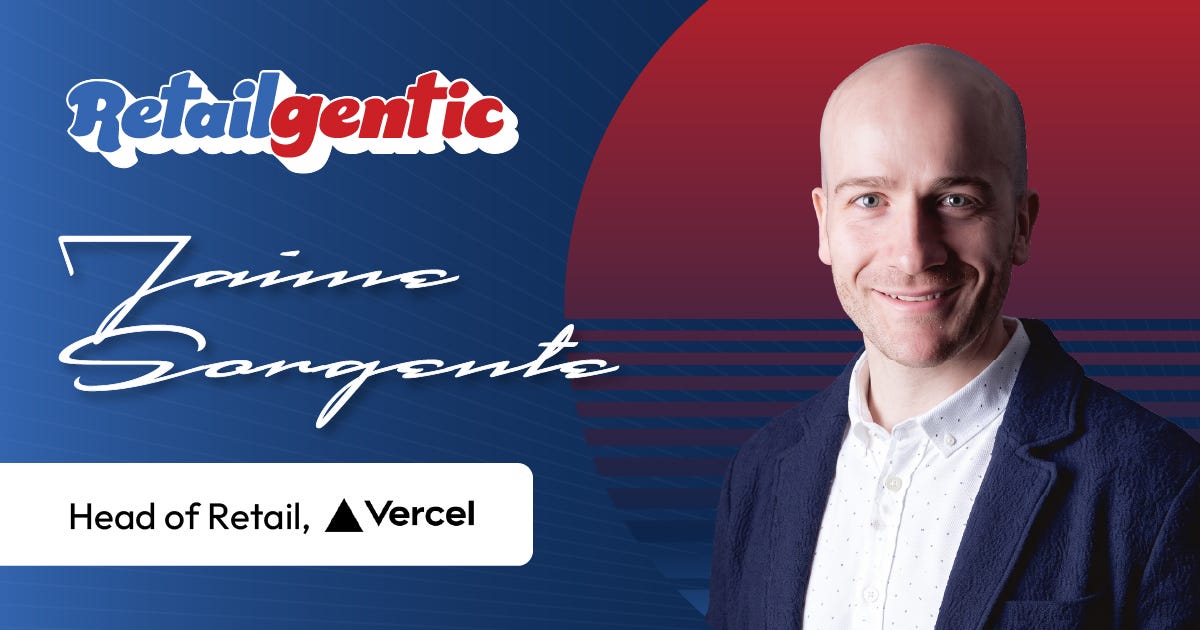
Jaime Sorgente is Head of Retail at Vercel, the developer-tools and infrastructure company behind Next.js (the open-source framework powering storefronts like walmart.com and target.com) and v0 (its vibe-coding tool). Jaime joined Vercel almost three years ago from a large hyperscaler, where an early-2023 habit of feeding client 10-Ks into ChatGPT convinced him that everything about go-to-market and software-making was about to change. A Stratechery podcast episode with Vercel CEO Guillermo Rauch sealed the deal, and he’s been building Vercel’s retail vertical ever since.

Listen/Watch Our Interview:
This week’s episode is a little different. We’ve has been noticing vibe-code platforms quietly showing up all over digital retail… at trade shows, in conversations with retailers and brands, and on the platforms’ own commerce pages. So we went to the source.
This is a platform deep dive with Vercel, the enterprise company behind v0 and Next.js, on what a “vibe coding” company is actually doing in our world of commerce, and it turns out the answer is: a lot more than you’d think.
Highlights
𝗧𝗵𝗲 𝟭𝟬𝟬-𝗺𝗶𝗹𝗹𝗶𝘀𝗲𝗰𝗼𝗻𝗱 𝗺𝗮𝘁𝗵: A Deloitte Digital + Google study cites clients found 100ms of load-time reduction drives a 7–8% lift in e-commerce conversion. “If the thing is faster, you’re gonna convert more. It’s just math.”
𝗛𝗲𝗹𝗹𝘆 𝗛𝗮𝗻𝘀𝗲𝗻’𝘀 𝗻𝘂𝗺𝗯𝗲𝗿𝘀: The Kontoor Brands-owned retailer cut load times from 2.5 to 1.5 seconds on Vercel, grew conversion 20% year over year, doubled its A/B test velocity, and blew away its Black Friday/Cyber Monday plan.
𝗧𝗵𝗲 𝗰𝗼𝗰𝗸𝘁𝗮𝗶𝗹-𝗽𝗮𝗿𝘁𝘆 𝗽𝗶𝘁𝗰𝗵: Vercel in three phrases… a developer tools company, an infrastructure provider, and an open-source software factory.
𝗬𝗼𝘂’𝘃𝗲 𝗮𝗹𝗿𝗲𝗮𝗱𝘆 𝘂𝘀𝗲𝗱 𝗩𝗲𝗿𝗰𝗲𝗹: walmart.com and target.com run on Next.js, and Under Armour, Crocs, Buck Mason, PetSmart, McAlister’s, DeWalt, Clorox, and even Meta.ai are Vercel-delivered applications.
𝗡𝗼𝘁 𝗮 𝗦𝗵𝗼𝗽𝗶𝗳𝘆 𝗸𝗶𝗹𝗹𝗲𝗿: Vercel doesn’t do product catalogs, inventory, or order management. It’s the storefront layer on top of your commerce platform. “We help you own your storefront and own your destiny.”
𝘃𝟬 𝗺𝗲𝗲𝘁𝘀 𝗦𝗵𝗼𝗽𝗶𝗳𝘆: v0 is now deeply integrated with Shopify, so you can customize your storefront in plain English
𝗧𝗶𝗺𝗲𝗹𝗶𝗻𝗲𝘀 𝗵𝗮𝗹𝘃𝗲𝗱: Custom storefront projects that were planned for a year are landing in six months, six-month plans in three.
𝗧𝗵𝗲 𝗮𝗴𝗲𝗻𝘁 𝗰𝘂𝘀𝘁𝗼𝗺𝗲𝗿: Next.js 16 was built to be readable and manipulated by Cursor, Claude, and Codex, “now we have this new customer, this agent customer, who wants to interact with your code base.”
𝗧𝗵𝗲 𝗹𝗶𝗴𝗵𝘁-𝗯𝘂𝗹𝗯 𝗺𝗼𝗺𝗲𝗻𝘁: Jaime’s conversion story: feeding 50-page client 10-Ks into ChatGPT in early 2023 and realizing everything about go-to-market, and the factories that make software, was about to change.
This one really lifted the veil on what the vibe-code platforms are actually doing in retail, and I think we’re just seeing the tip of the iceberg. Enjoy the conversation.
🎧 Listen wherever you get your podcasts: Spotify, Apple, etc.
Or, we have a video version on YouTube (make sure to subscribe!) →
Want to Learn More?
Stay on top of what’s happening in agentic commerce, from the tools powering it to the founders building with it by following us across platforms:
Podcast: https://retailgentic.transistor.fm
Instagram: https://www.instagram.com/retailgentic/
We're here to make sense of what’s next in retail + AI and bring you along for the ride. Subscribe and stay tuned!