


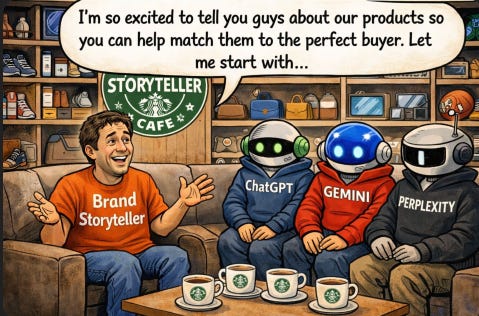
In my post last week, we talked about the fact that Google has had us locked in ‘Keyword Jail” for the last 20 years. Now Agentic Commerce has liberated us and we are entering the Golden Age of Storytelling.
That post was strategic - very high level to help understand the new opportunities and challenges we face. To summarize, here’s the before and after:
Before: Search Engine Era
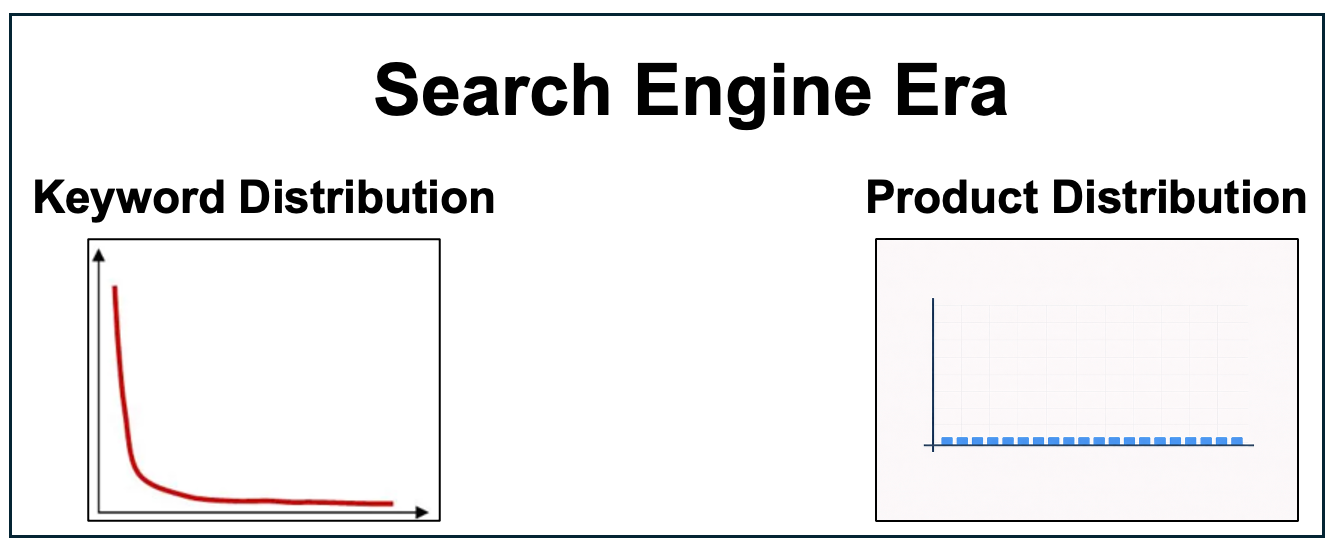
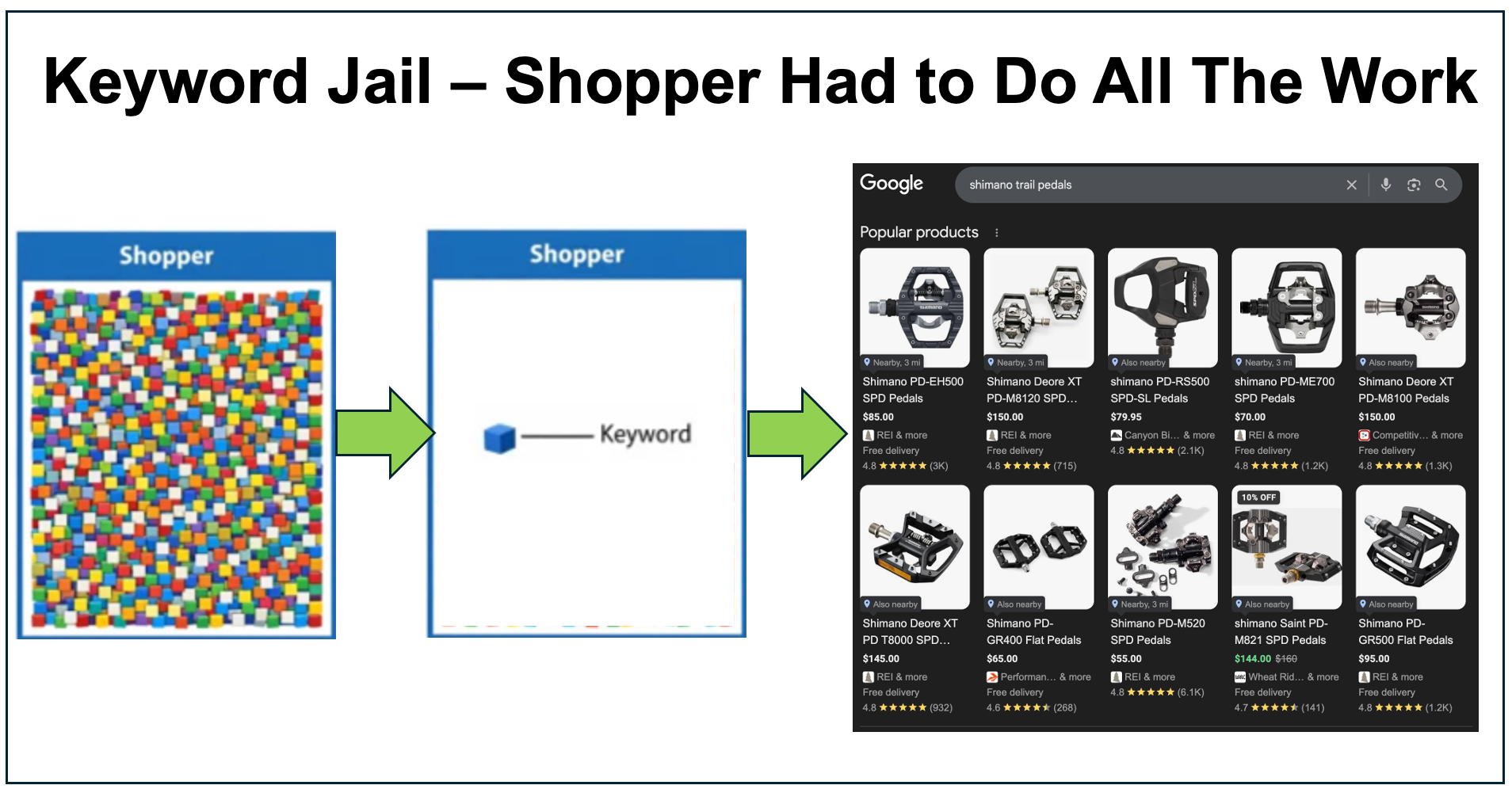
In the 2005-2025 period, Google and search engines ruled supreme. Consumers were ‘trained’ to find anything they would enter:
1-4 keywords, any more and you would never find what you wanted
Click on 10 blue links
Search on 1-X sites to find what you are looking for
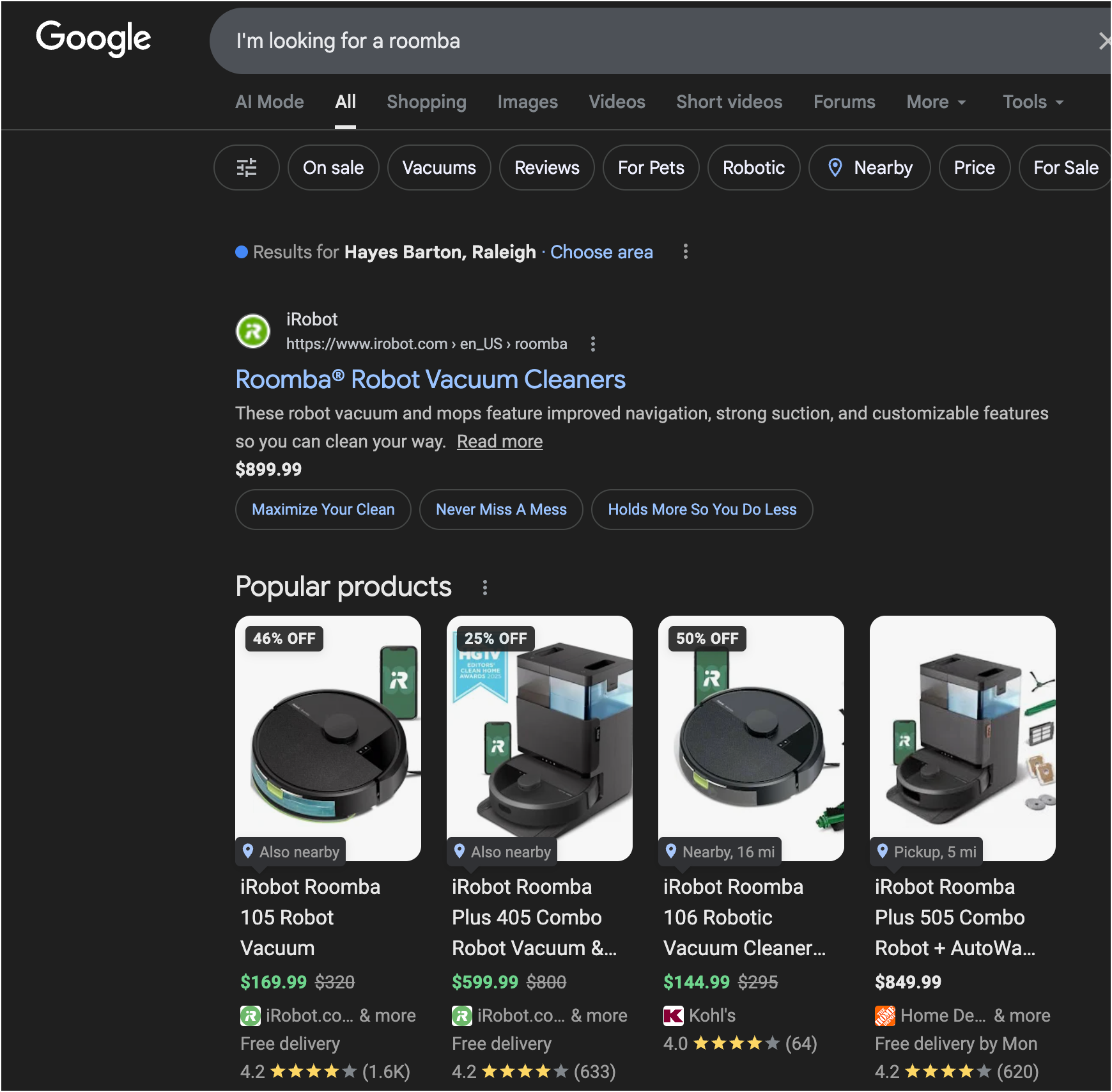
In our world of ecommerce, if you entered a keyword sequence that was product-level you would trigger the Google Shopping widget like this→
After: Answer Engine / Storytelling Era
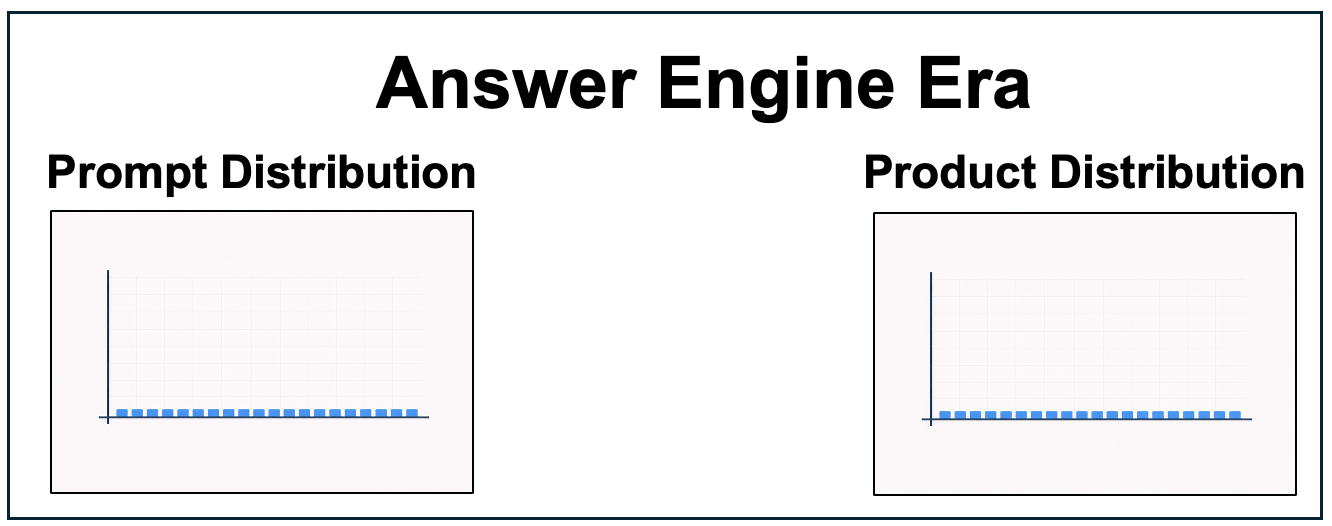
From 2026 forward, the customer is going to have several multi-turn discussions with an Answer Engine. The prompt distribution is an infinite long-tail as is product-distribtuion. No keywords, no head/tail:
The discussion the majority of times doesn’t even start product-based, in this example, I start with a problem statement (dog fur everywhere!)
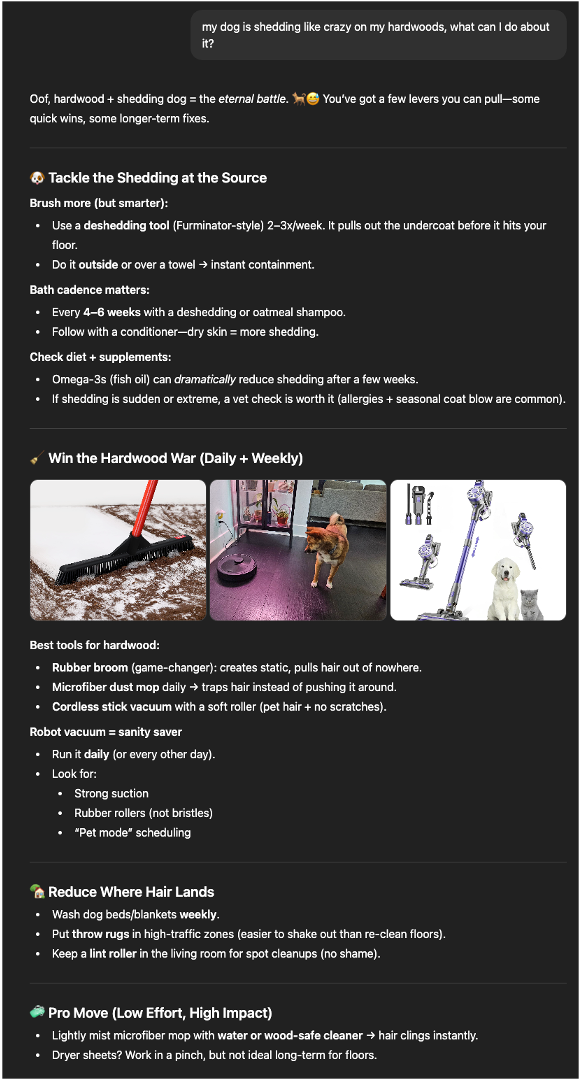
In that discussion, it brings up one of the solutions is a robot vaccuum. I ask the engine about it generally and it recommends products. I look at them and see a great deal→
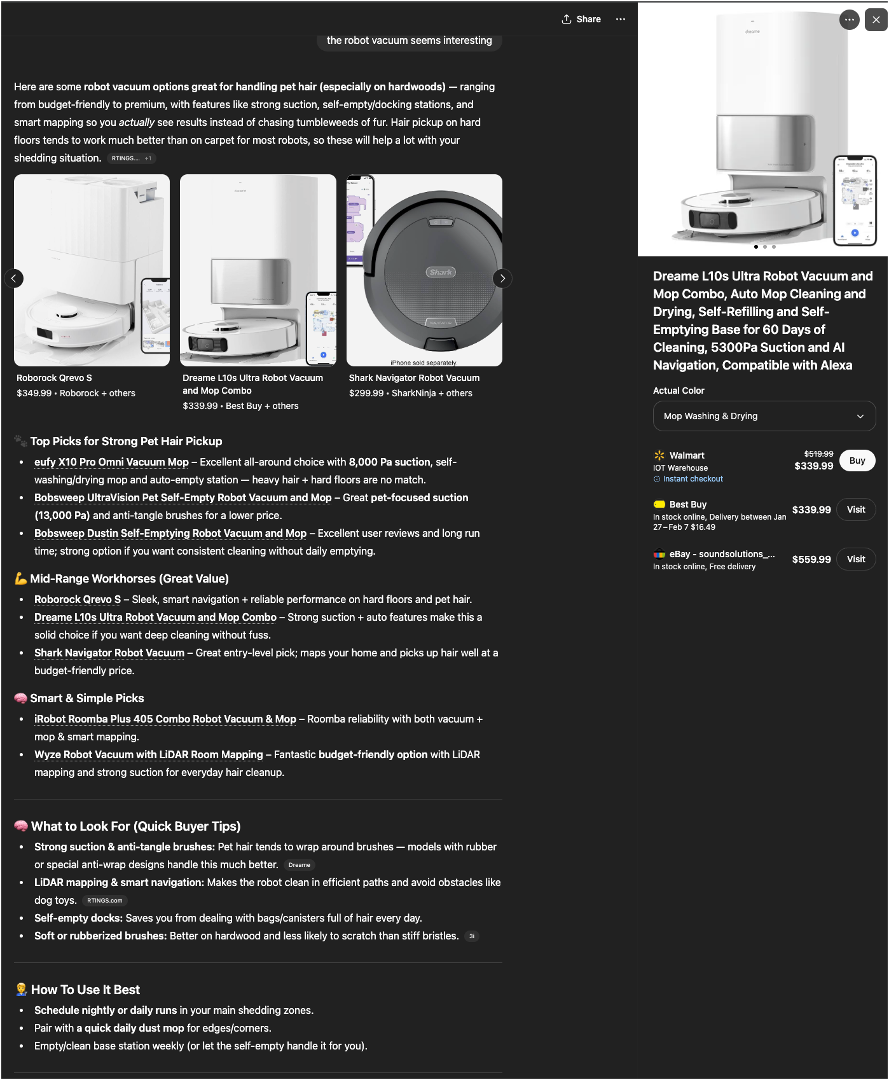
The Dreame L10e has a mop and a vaccuum is highly rated and has a great sale at Walmart ($519→$339!!!) and I buy it! Bang bang. →
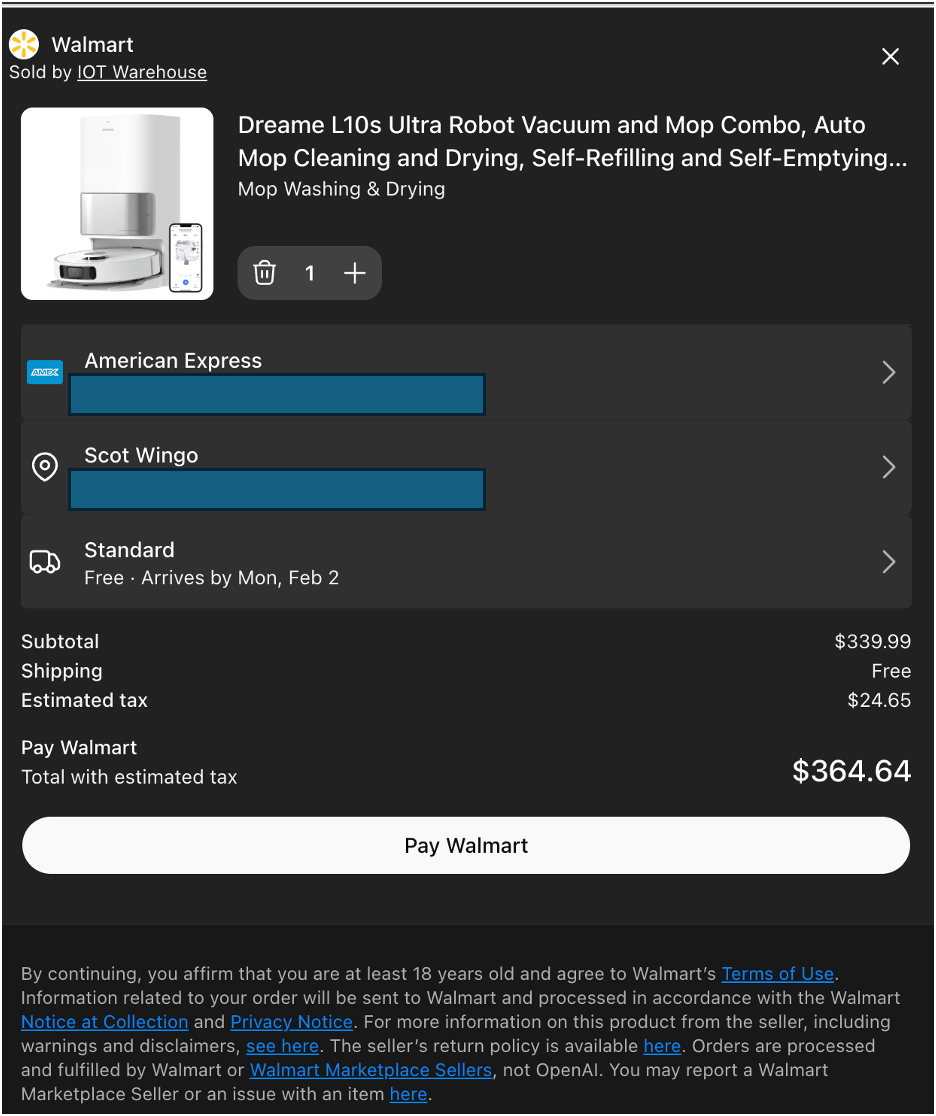
The shopping journey has compressed from:
Research→Search→tab/tab/tab/tab/tab→Research→Search→Find→click/click/click/click/click→ Buy
Time Elapsed: 20-60 minutes
to:
⏱️ ChatGPT: Ask question, ask question (Research) ask question (Find)→ Buy
Time Elapsed: < 5 minutes
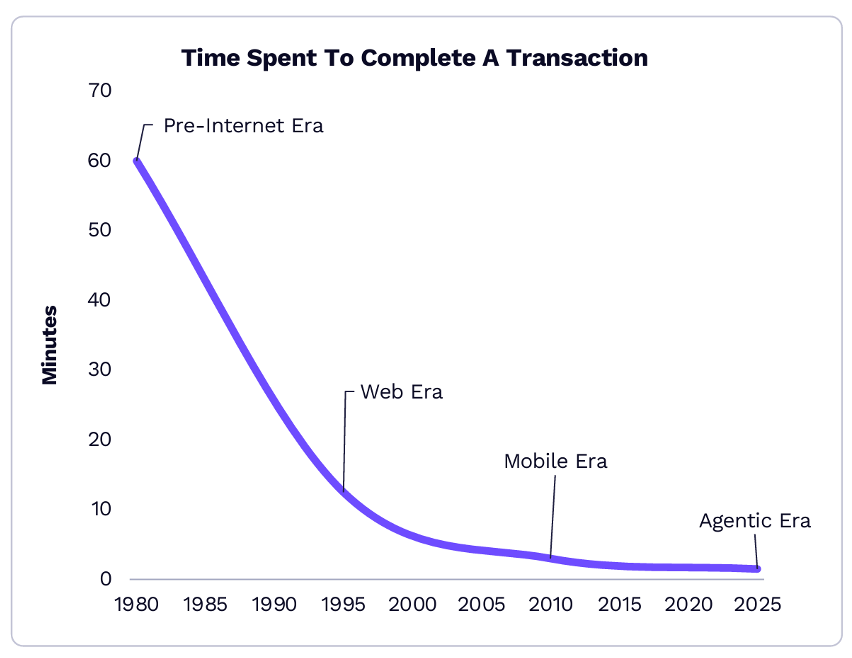
Source: ARK Invest
In the Agentic Commerce example:
Never left ChatGPT (zero click)
Never talked about a brand
Never entered a keyword from the old era
Never clicked or saw a citation
The AEO/GEO industry is trying to make marketers think they can solve this just like SEO did in the keywrod era. Spoiler alert: They can not. The prompt distribution is long-tail now - more on this thread next time.
To show up in this new world, you need to focus on product level content -train the models to be YOUR sales associate and recommend your robot vacuum to the long-tail of buyers.
The Three Levels of Brand Storytelling
Before we jump into a tactical example, let’s look at the three levels of storytelling.
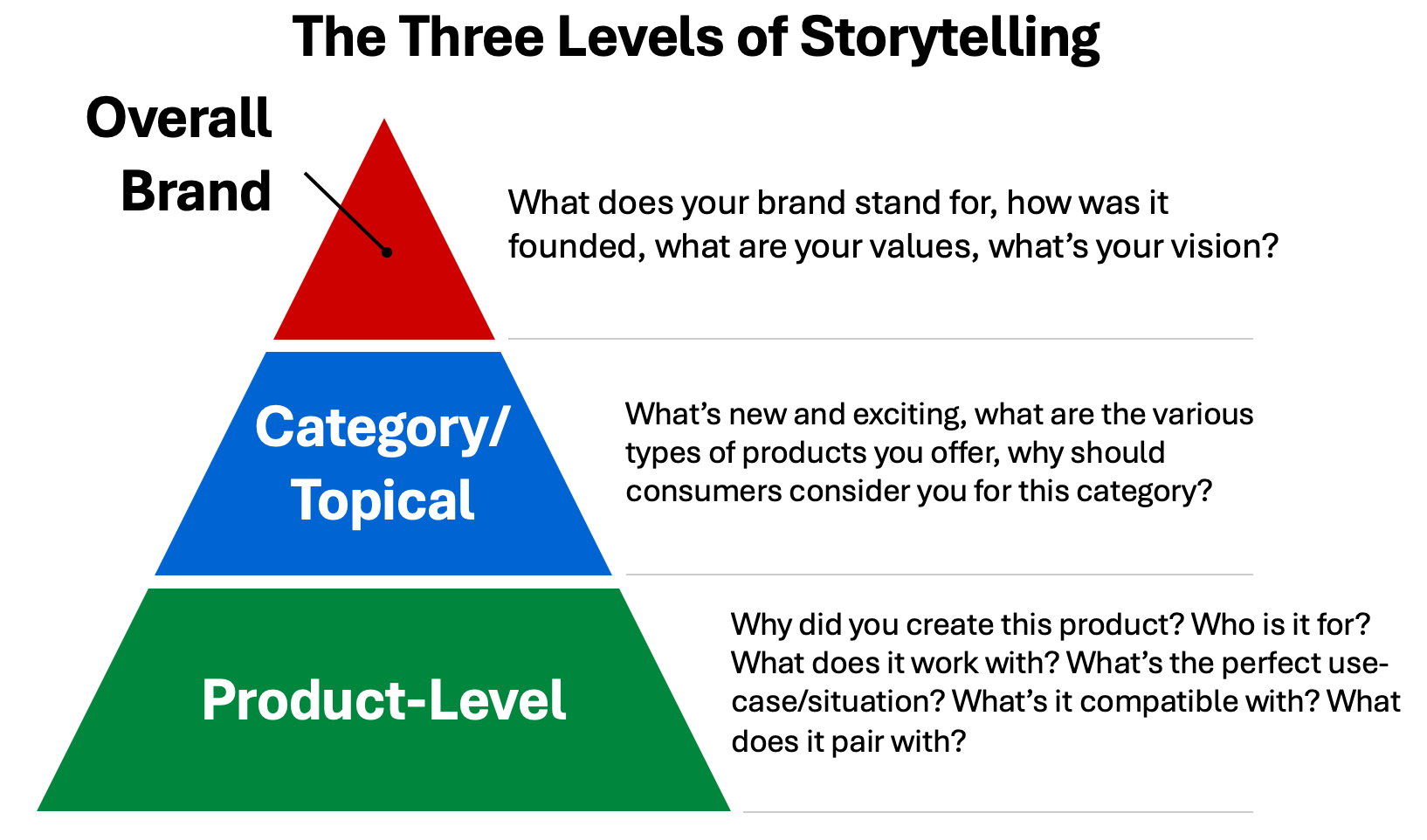
I saw the keynote by Ralph Lauren at NRF so I’ll use them as an example.
Overall Brand Storytelling
The tip of the spear is teling your overall brand story - super top of the funnel storytelling. Here’s the Ralph Lauren Example:
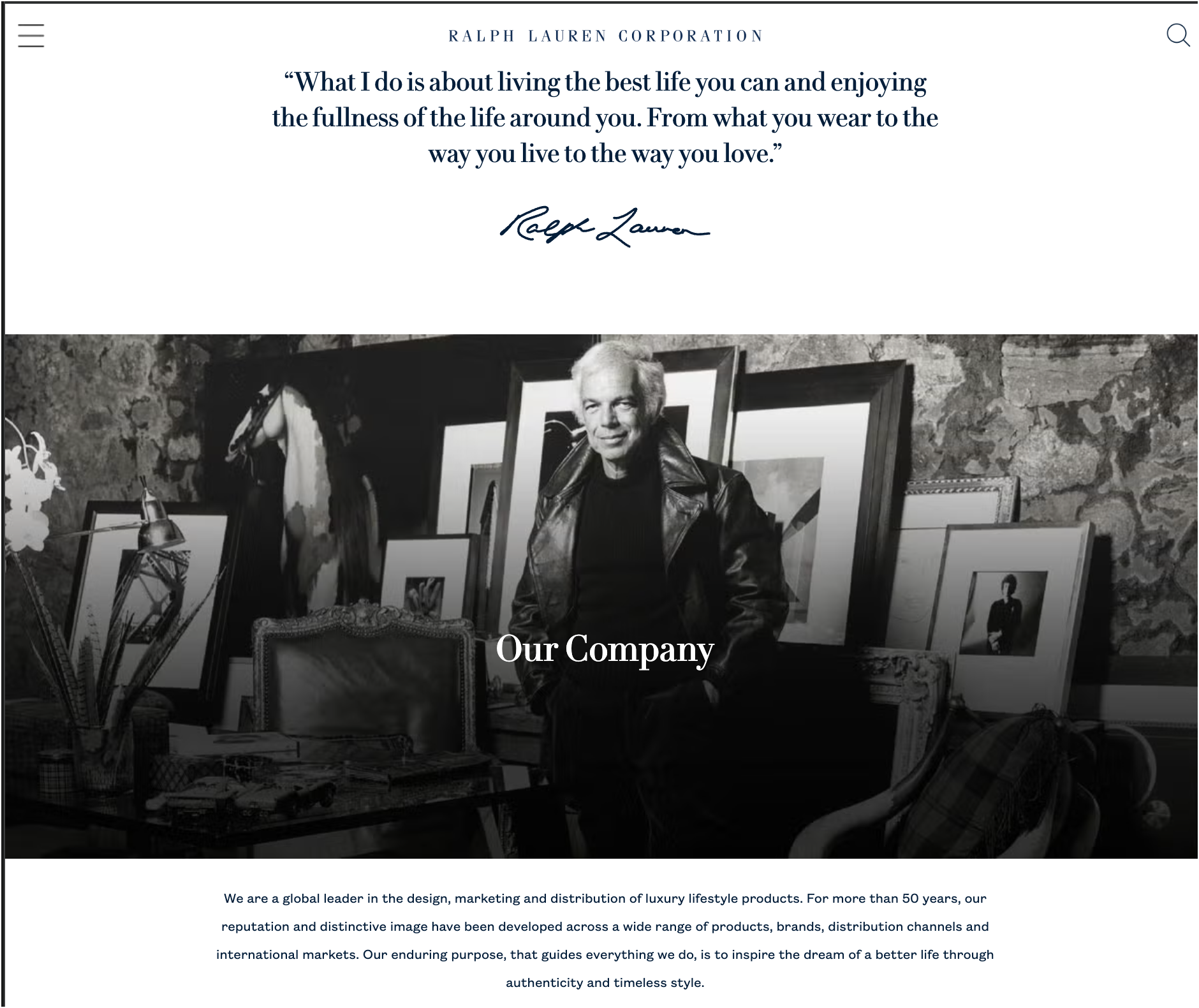
We are a global leader in the design, marketing and distribution of luxury lifestyle products. For more than 50 years, our reputation and distinctive image have been developed across a wide range of products, brands, distribution channels and international markets. Our enduring purpose, that guides everything we do, is to inspire the dream of a better life through authenticity and timeless style.
This plus all the things people have said. This level you can AEO/GEO, here it is→(ChatGPT 5.2)
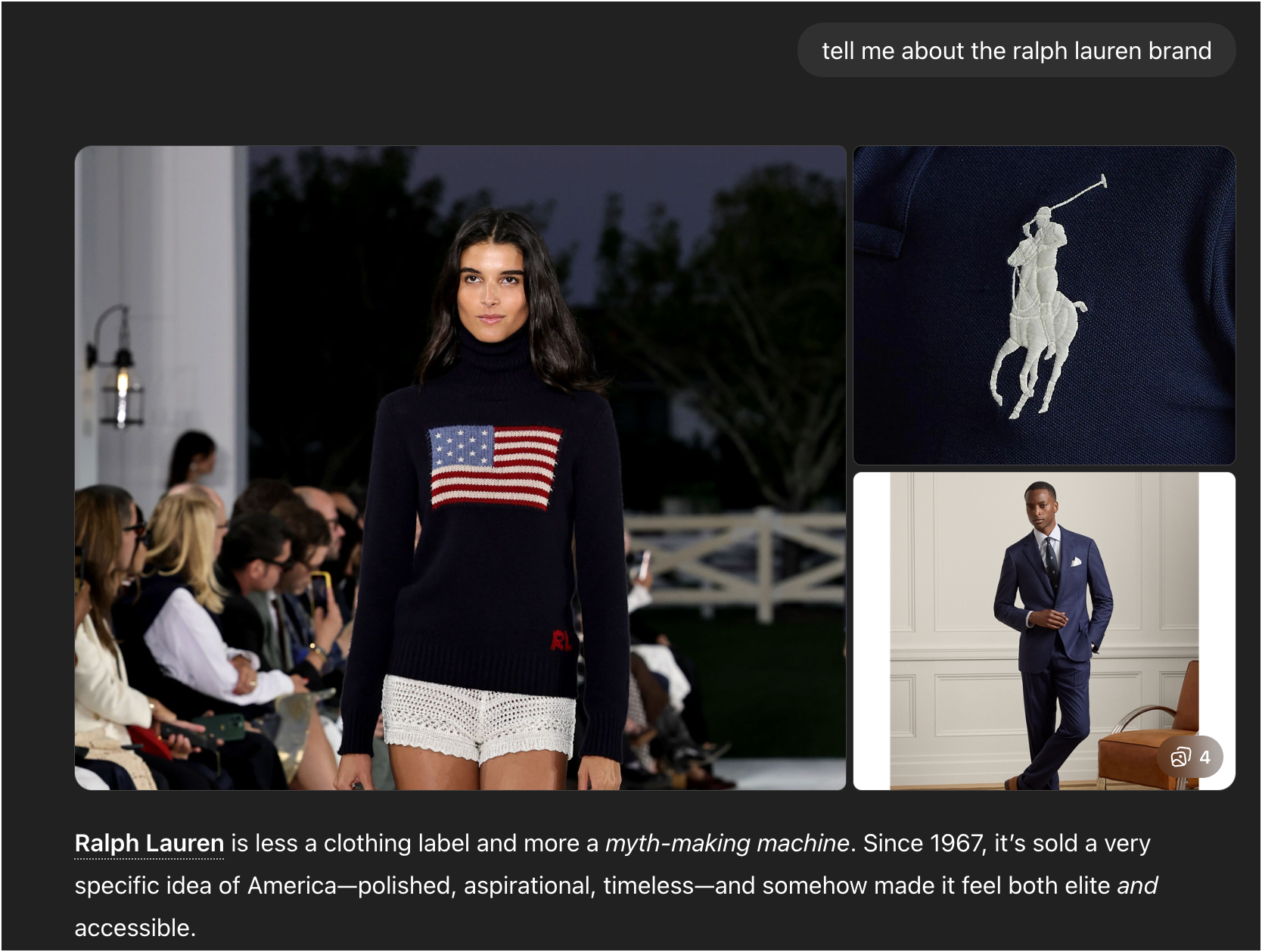
It goes into great detail. Here’s the entire answer. ChatGPT totally nails it.
Category/Topical Storytelling
A great example of this at RL is their microsite about their role as Outfitters to Team USA at the Olympics:
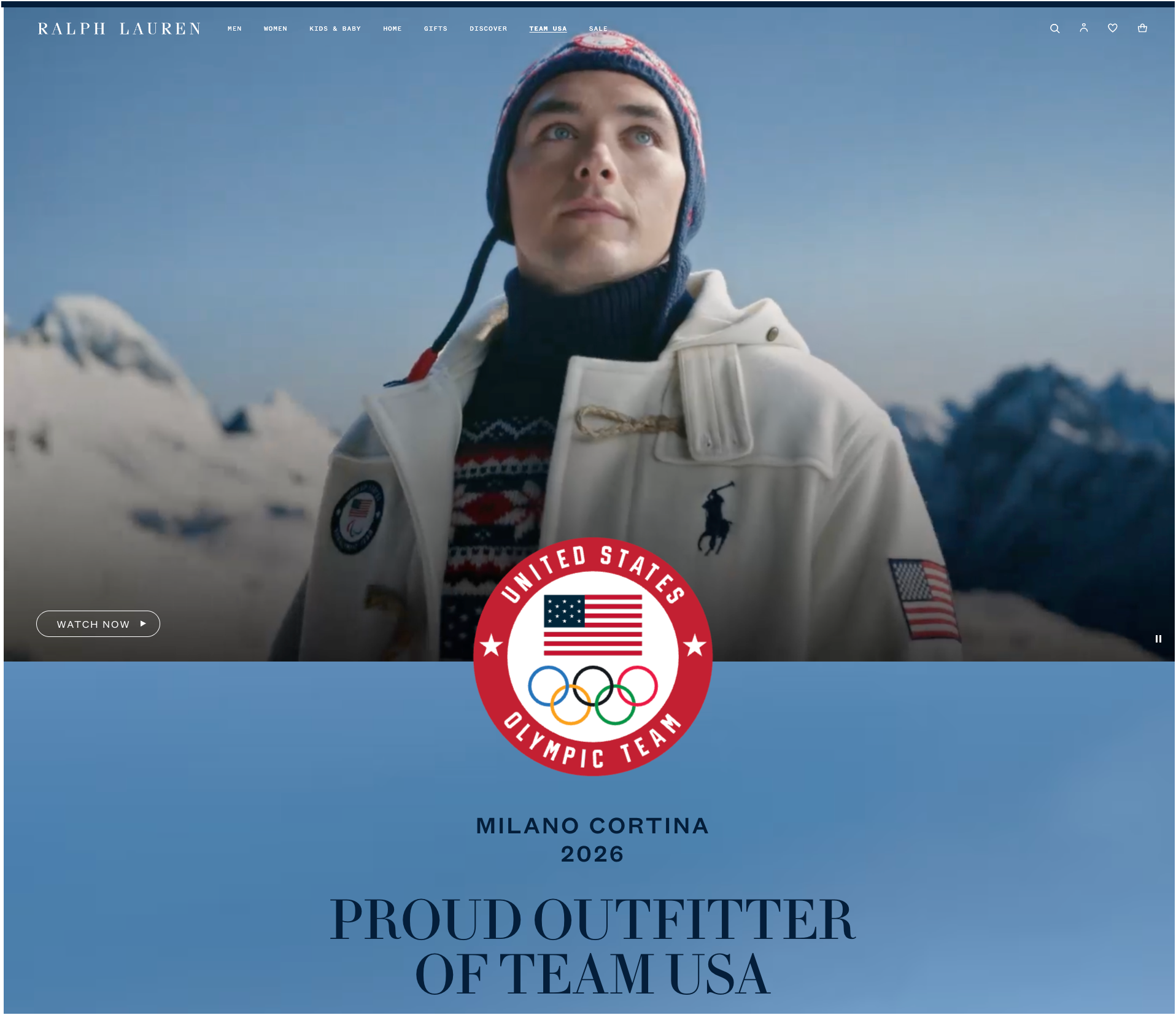
The vibrant and dynamic energy of Milano Cortina 2026 inspires sporty graphics, bold color-blocking, and heritage motifs in America’s signature palette of red, white, and blue.
Product-Level Storytelling
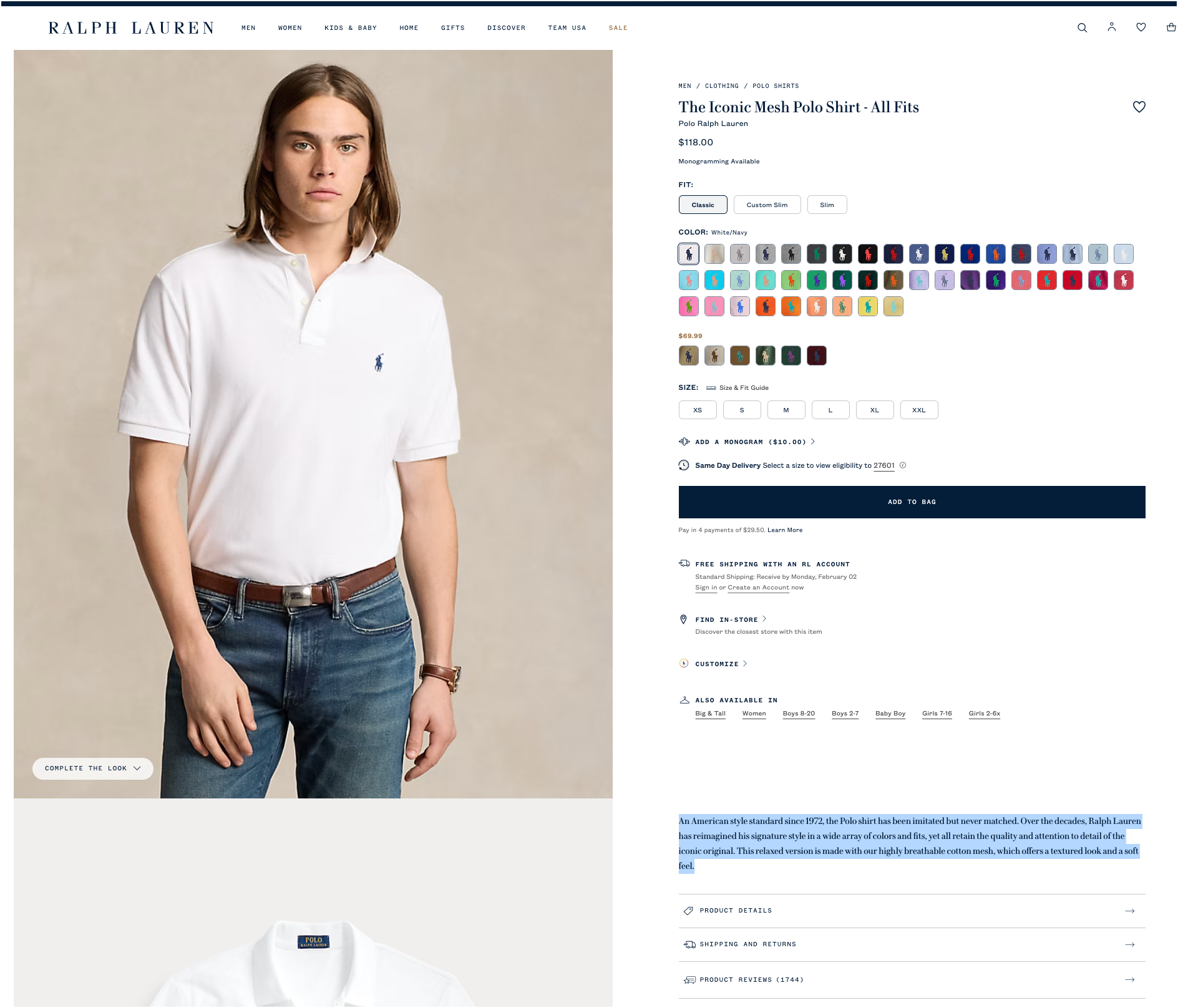
Here’s the ‘hero text’ on the PDP→
An American style standard since 1972, the Polo shirt has been imitated but never matched. Over the decades, Ralph Lauren has reimagined his signature style in a wide array of colors and fits, yet all retain the quality and attention to detail of the iconic original. This relaxed version is made with our highly breathable cotton mesh, which offers a textured look and a soft feel.
This is product-level storytelling.
The Agentic Commerce Iceberg Problem
If you look at any ecommerce site as either a percent of overall pages or percent overall traffic, the brand and category pages are sub 5%. Don’t get me wrong, they are critically important to the overall brand building - maybe 95%. But for most ecommerce brands, that’s already ‘baked in the cake’ as they say. There’s not much we can do about it. Unless you have a new challenger brand, your brand messaging has been established. You can check the sentiment on it, but (covered in the next post) many of the ‘best practices’ the AEO/GEO companies recommend come with a fair amount of risk.
Where you can make the biggest impact in the world of Agentic Commerce is with Agentic Commerce Optimization (ACO). The challenge is we have a massive iceberg problem:
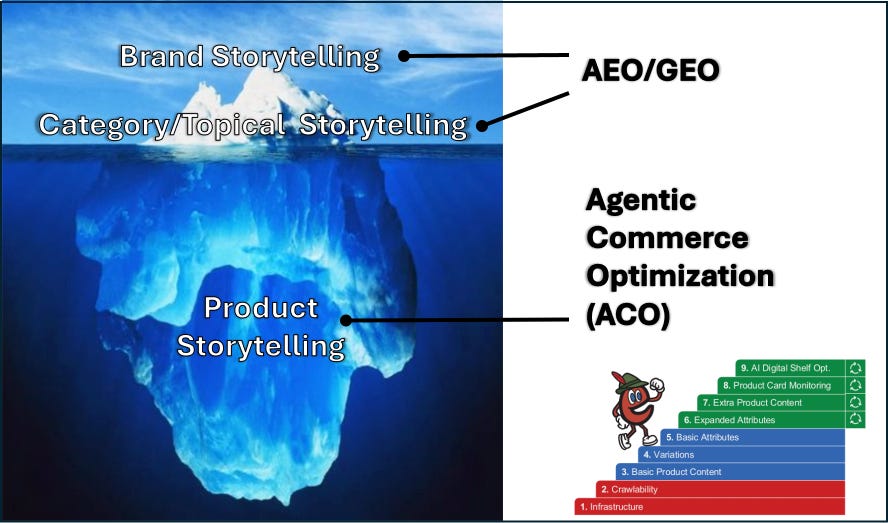
Details of the iceberg problem:
PDP storytelling atrophy - Because of 20 years of keyword jail our product-level storytelling needs a lot of work
Process - Many brands and retailers have a long complex multi-functional process for creating and editing PDPs
Scale - The average number of PDPs that need optimization for tier 1 merchants is 5,000 with a range of 1000-500,000
Urgency - Agentic commerce is a compelling opportunity, but small for now, but what’s driving the urgency is:
The steep decline in organic/paid Google high-conversion traffic (creates a 2026 revenue hold)
It’s January and we now have four level-three (buy) agentic commerce players: ChatGPT, Google, Perplexity and Copilot. Everyone can feel this is the breakthrough year - Holiday 26 will be the year Agentic Commerce makes the leap to being a material part of driving sales.
Tying it all Together With a Real-World Example
Now that we’ve established the ‘what’ and iceberg aspects of product-level storytelling let’s look at a real-world example. Shout out to ReFiBuy, Chief Product Officer who came up with this one based on a personal shopping experience to help customer’s understand product-level storytelling.
In this scenario, we have a mountain bike with a bit of a situation:

No worries, we’ve got our trusted product advisor ChatGPT→
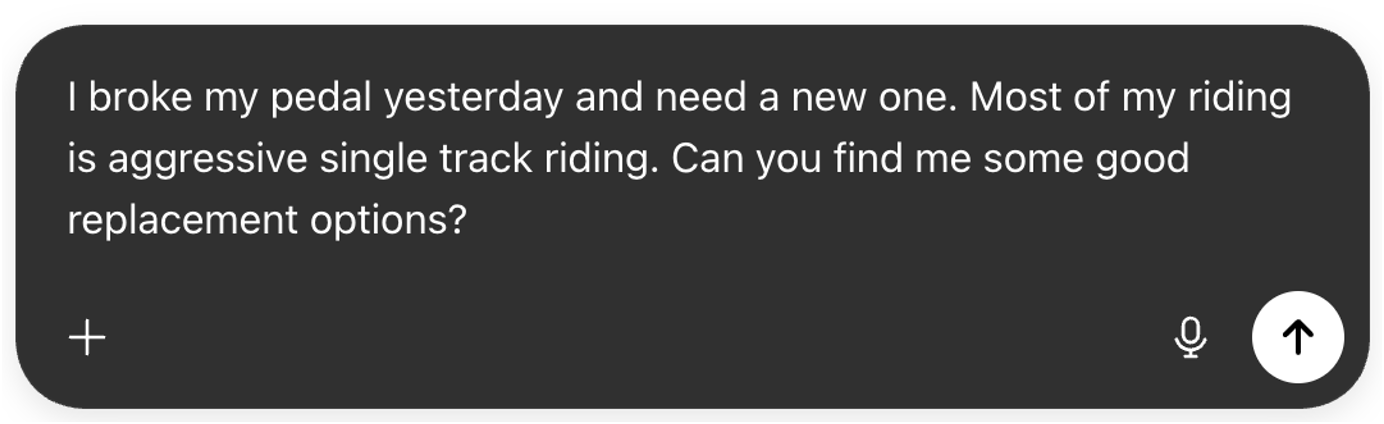
This is a perfect example of a long-tail prompt. There’s no brand mentioned, there’s not a lot of context. In the Search engine era, the shopper could never do this.
LLMs give Agentic Commerce the previously impossible ability to answer this. Here’s how they do it and where merchants come in:
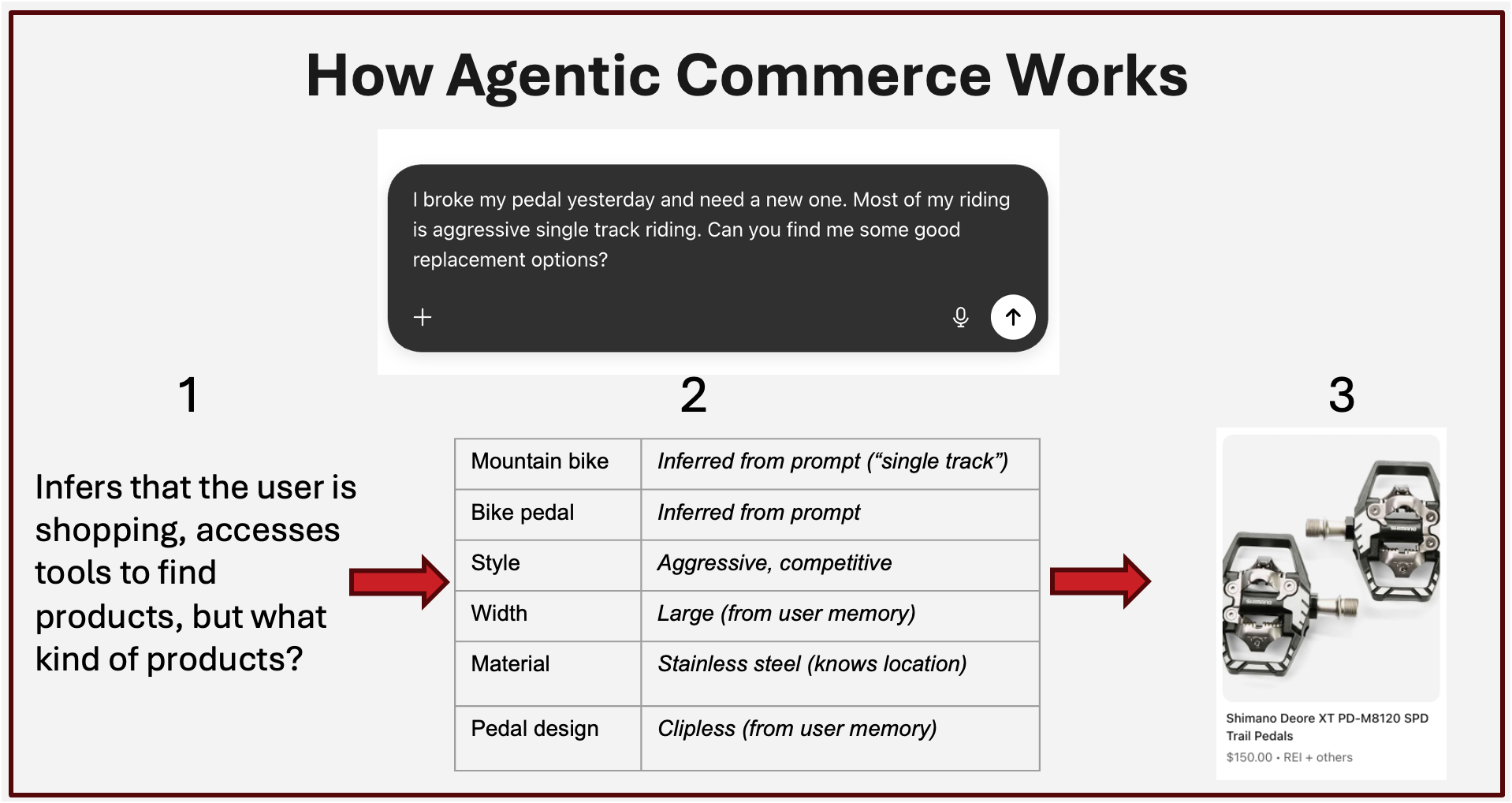
How Agentic Commerce Works
Let’s go through this step-by-step:
The underlying LLM (ChatGPT in this example) evaluates the prompt and realizes there is shopping intent. It gathers context and passes it on to an internal ‘shopping search’ index which is basically ChatGPT’s ‘golden catalog’ and uses
The LLM pulls in context for this product search from a variety sources:
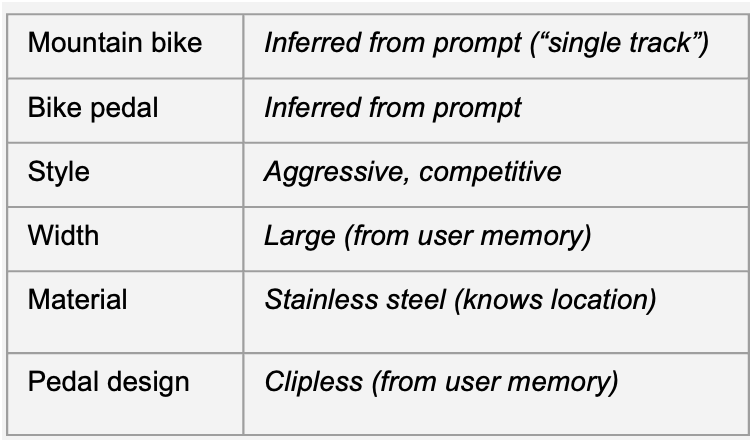
Prompt - the prompt gives the LLM context to know this is a mountain bike
Prompt - bike pedal inferred from prompt
Style - Aggressive competitive - inferred from prompt
Memory - 90 days ago the shopper was looking for shoes and got some wide New Balances, the LLM has remembered that
Memory - 60 days ago the user purchased some Sidi clipless bike shoes
Location - This user is in Portland which is super rainy - inferring they will need stainless steel
Compatibility - The user knows the brand of mountain bike the user owns because she asked about a chain tightening tip 20 days ago and the engine knows there’s a compatibility check there as well as the shoes - if they had been clip-in that would be higher priority.
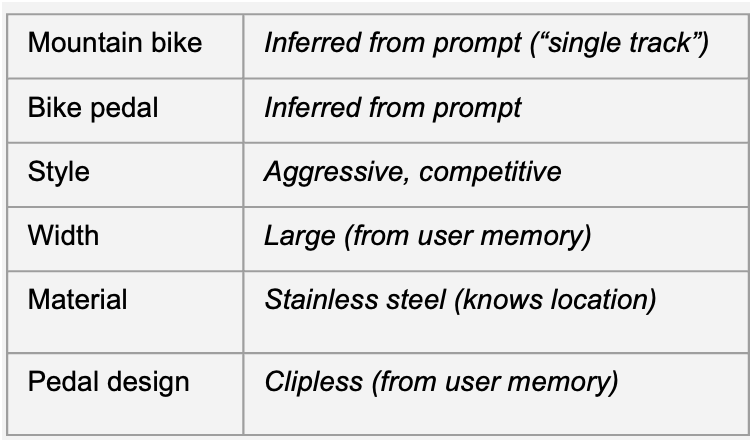
Merchant’s role: Product-level context - Enhanced Attributes
This is where our job comes in as merchants - the LLM did it’s job to figure out exactly what the user was looking for and has a 10-dimensional view of that from the prompt, memory, location and purchase history.
Success comes from ensuring that the LLM has a complete understanding of every one of your products - 2-10X of what was needed in the search era because we’re going from searches to answers and clicks to transactions. This starts with supplying a comprehensive list of attributes:
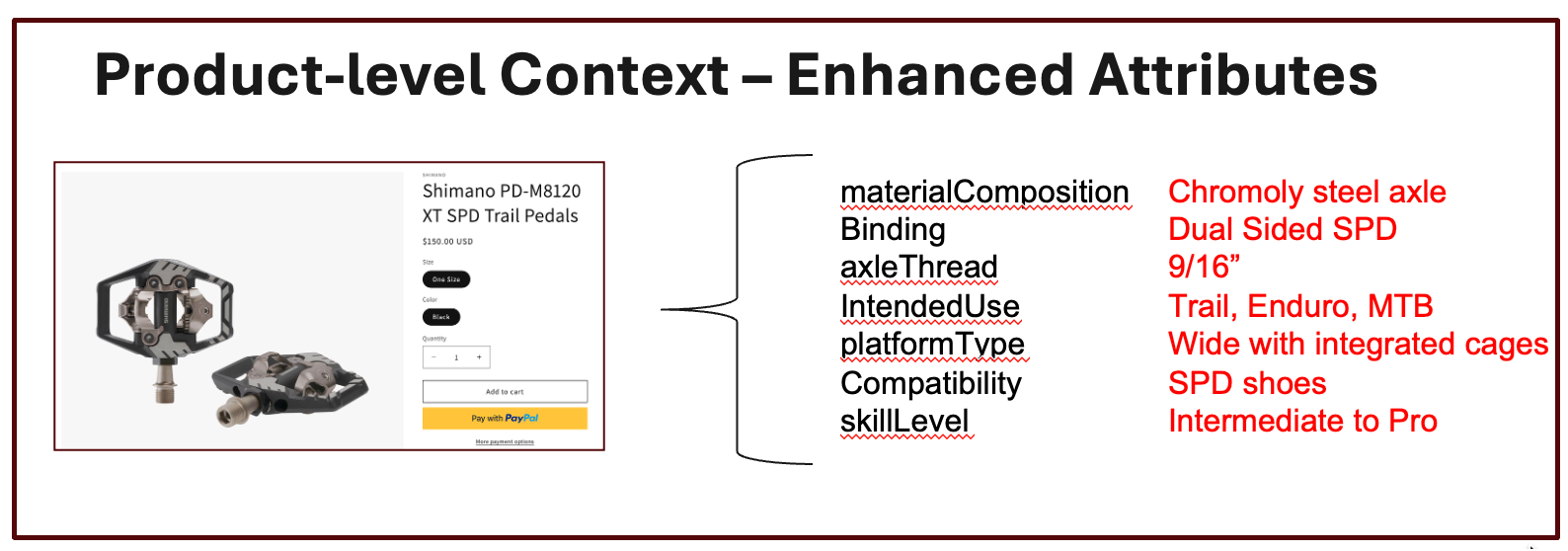
Now you can see that the LLM has the information needed to ‘match’ (canonicalize) your products to their catalog (product card) and then when the shopper comes along we can match what they want and all the inferred attributes. This isn’t storytelling per-se, but there’s a second piece of content that ChatGPT explicitly wants (so does Gemini BTW).
Product-level Context - Q+A
In the ChatGPT Instant Checkout feed specification, they provided a ‘q_and_a’ field that has no specification the limit. The message is clear - give us any and all context you can (infinite storytelling!).
In this example, given it’s a bike pedal, and more of an accessory than a hero product, we use the Q+A to talk about the compatibility of this item:
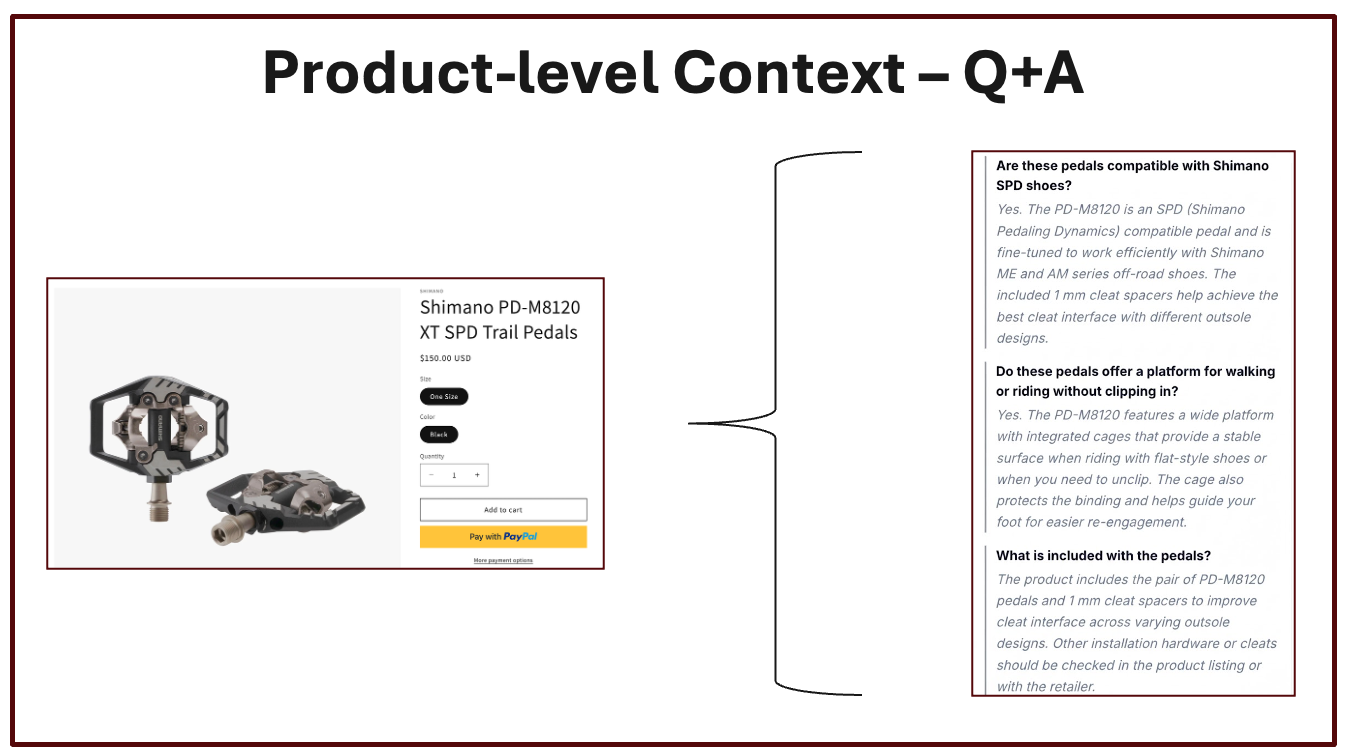
We recommend putting the Q+A in the datafeed to ChatGPT and on your PDP - if you don’t want human shoppers to see it on your Q+A, you can instead put it in metadata on our PDP.
Summary
I hope this helps you tie together the strategy and tactical elements of the golden age of storytelling - Agentic Commece.
We went from an era where the shopper had to take all their context, boil it down to a 1-4 keywords, search, research through hundreds of products, find the one they want and buy.
In the Agentic Commerce era, the shopper can give an LLM a prompt that includes some context. Based on that prompt, the user’s past purchases, memory of other facts, the agent does the Research. But it needs the biggest product data with expanded attibutes and extra context to Research, Find and ultimately help Buy the perfect product.
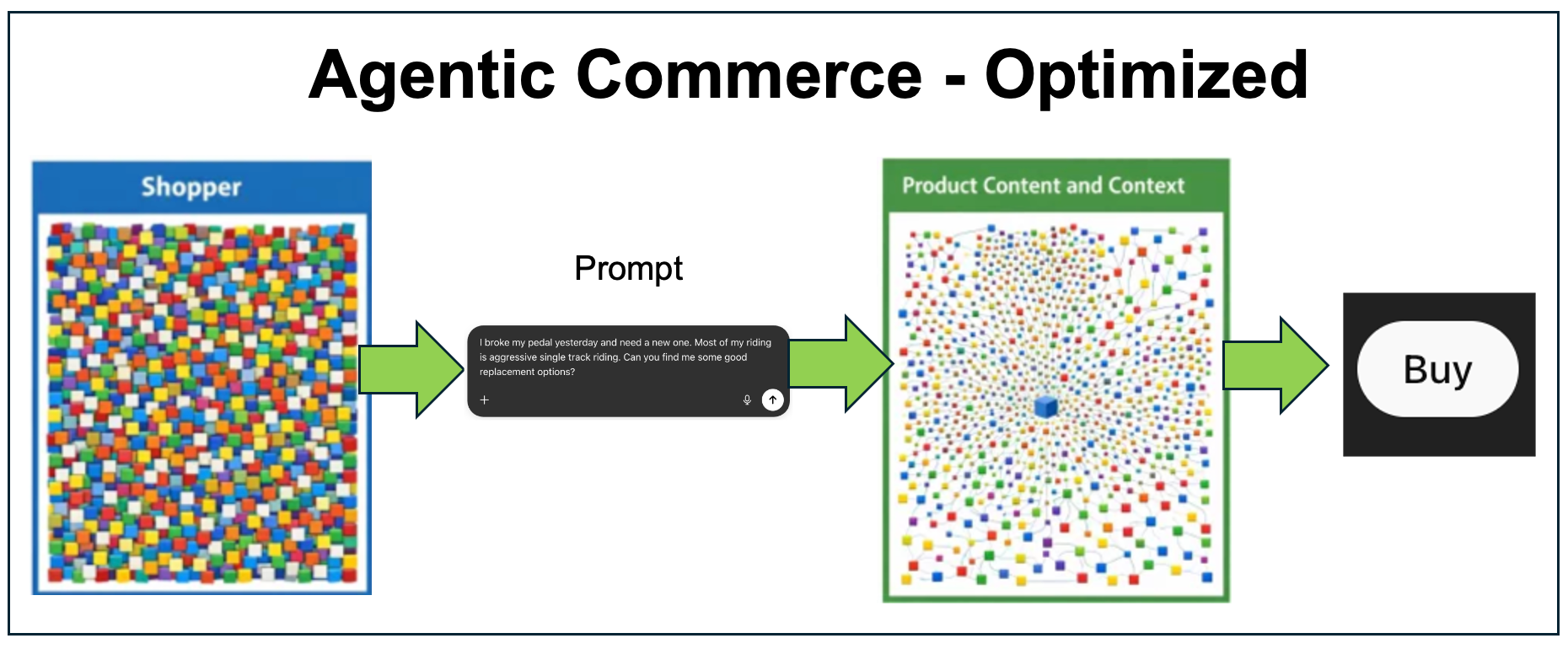
The best thing we can be doing as merchants in this new era is bridging the huge product content gulf that we find ourselves in after 20 years of Keyword Jail.
Free Webinar Reminder
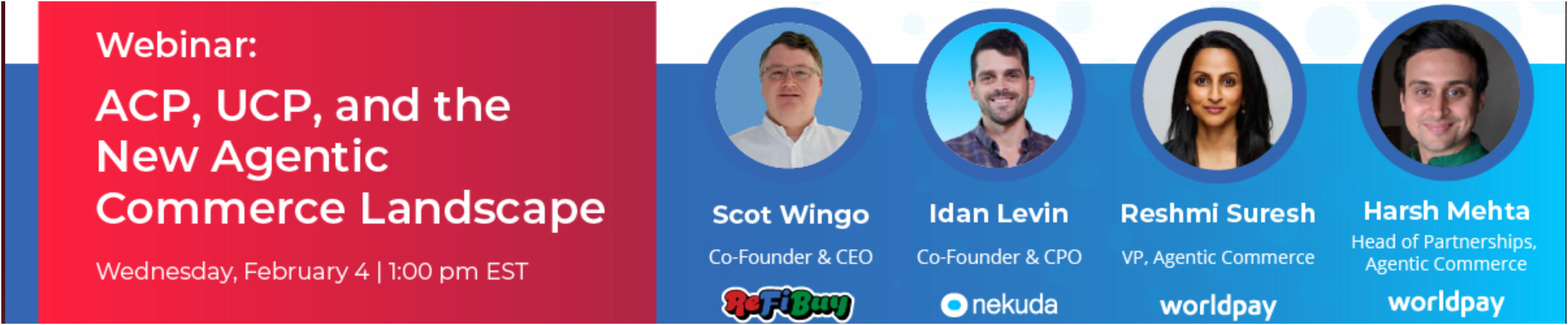
We’re hosting a webinar Feb 4 at 1pm EST with Worldpay and Nekuda - Register here