


Welcome to the First Installment of Reader Questions!
We started Retailgentic 18 months ago now and across our various channels now have built to ~8000 subscribers across all the channels. For 16.5 of those months about every 2 weeks we’d get a question as a comment or into the various emails and other vehicles out there. In the last 45 days and really in the last two weeks, we have been getting a ton of great questions. If they are super-specific and we don’t feel would help the general reader, we handle them separately.
But now we have enough that we think are interesting to the majority of our audience that we thought it would be interesting to try something new - Reader questions!
There are three buckets of questions:
Agentic Commerce Industry Questions
Brand/Retailer Oriented Questions
Misc - 2 Shopify questions and our most common pitch
Agentic Commerce Industry Questions
In this section we have 5 questions about some industry trends or news we’ve previously covered
Q1: What do you think of this Visa report?
From: Marcus via LI DM
Answer: Thanks for the question Marcus! The Visa report was on my list to cover in a November round-up, but your question made me realize that with Thanksgiving and then all the BFCM news, we probably will have to skip November, so let’s cover it now. The Visa report in question is here - in it Visa ran 22 various AI models through a variety of agentic shopping tasks. The press release will take you to a whole micro-site. I’ve seen two analyses of the data that were great and really helped illustrate the data:
First there’s this graphic:
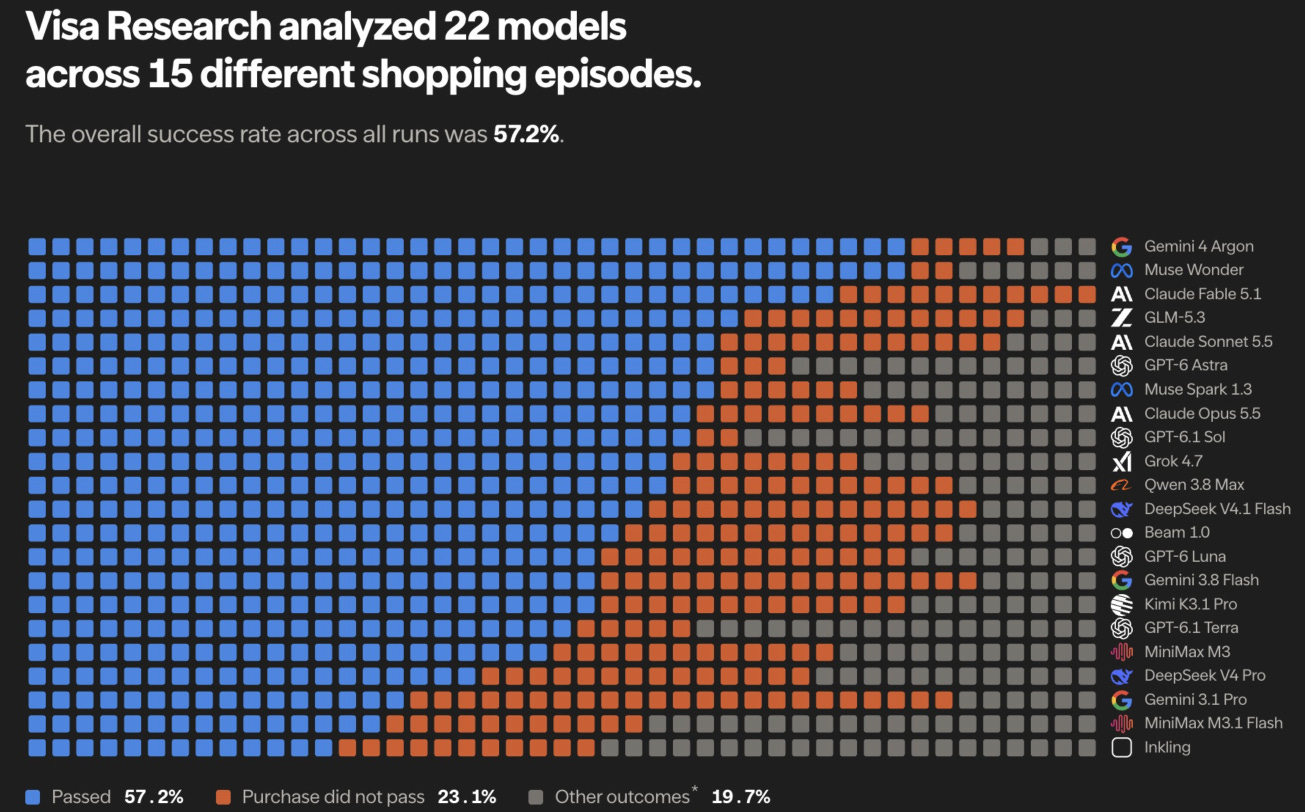
This graphic shows that Gemini 4 Argon is the top model completing all but 8 - 5 hard failed and 3 were ‘other outcome’ - it’s not entirely clear what this means, best guess is a CAPTCHA, last-step block - something like that.
Zooming out to 30,000 ft, you can visualize the ‘jagged edge’ of frontier models. Because it’s a new benchmark, we can’t look back in time too far, but, you can see back to Gemini 3.1 Pro which goes way way back to Feb of 2026 (haha- crazy right?). This also illustrates that as the models get better the frontier labs are pushing the edges out further and further - the last big OpenAI, Gemini, Muse and Anthropic models all made a clear push on browser use training, resulting in the leap forward you see here. Project the exponential curve forward, by this time next year, we can assume that the top models will be all blue and Visa will be re-doing the benchmark to make it harder because a 100% complete benchmark isn’t really a benchmark at all.
How the Visa benchmark works
It’s important to note that this benchmark was designed to focus on browser use. There’s a set of people that believe this is the path for the most completeness - if an agent can do 100% what a human can do, then that’s all of ecommerce (minus blocking). Another set of people believe that it’s better to have a set of machine-to-machine protocols (ACP, UCP, WebCP as examples) that speed up the transaction, add capabilities and take a lot of steps that can create problems from the process for an agent. I suppose there’s also a hybrid in there where you use a protocol for Plan A and browser use for Plan B.
Agentic Harnesses and Models
On top of the models are ‘agentic harnesses’ that add knowledge and capabilities. For example, Muse is the harness for Muse Wonder (Today, free Muse uses a less powerful, less expensive model, paid Muse uses Wonder). We’ve written that Google is imminently coming out with a shopping agent of some kind and it’s going to be interesting to see if they go totally browser based or a hybrid of UCP and browser, I am hoping we see that hybrid model it would be pretty killer IMHO.
But, what about cost?
The other graphic, built by A16Z, compares capabilities vs. cost:
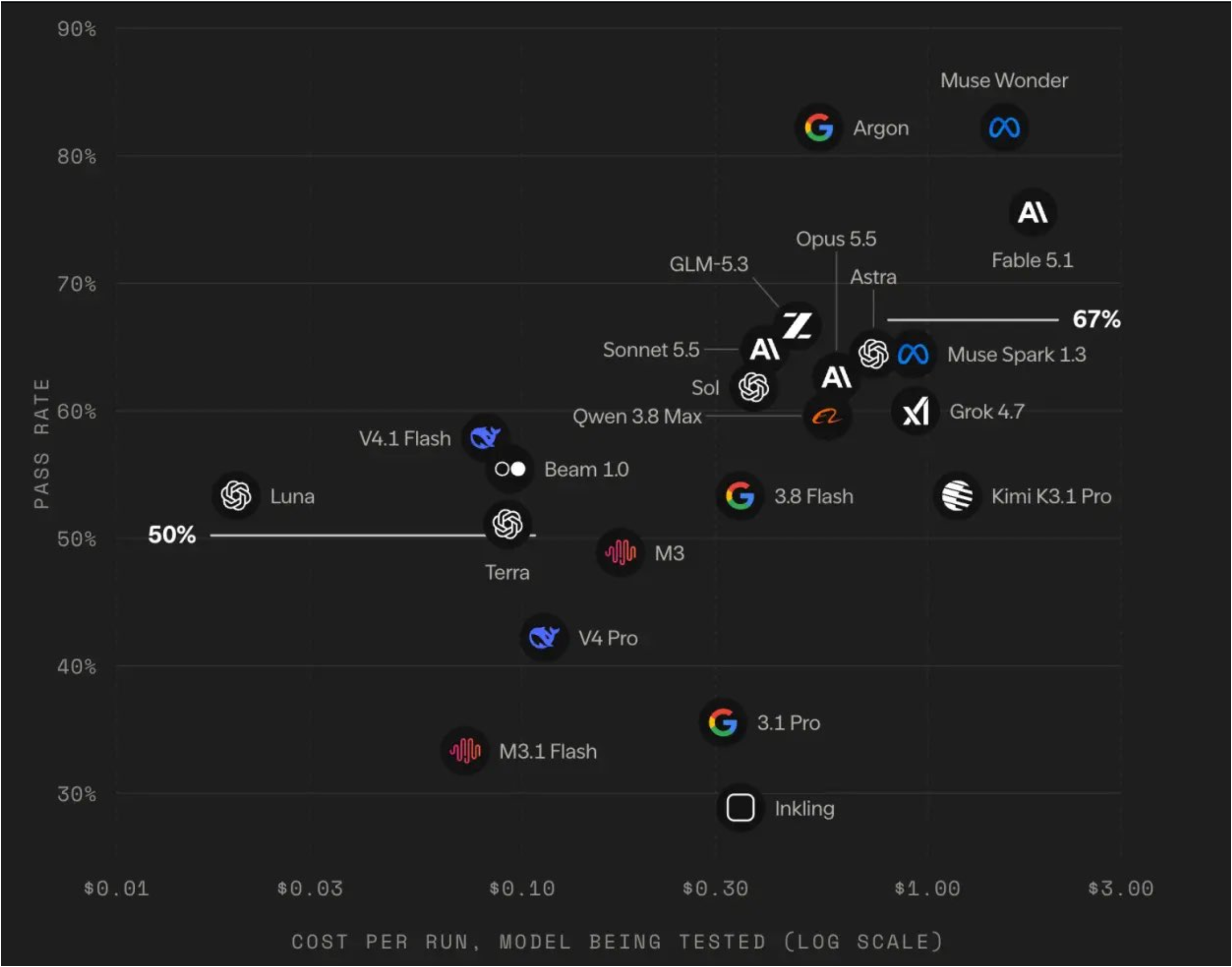
Here you can see the frontier models currently spend $1-3 in token cost to achieve a complex shopping task - somebody has to pay for that (Merchant friends, you know who that is!). In a steady state World, these costs will decline, but we have a lot of weird things going on in AI and there are many pundits predicting a slow-down in data center buildout and thus a shortage in token supply with demand surging. This suggests prices are going to go up, way up.
Those were my observations from the data.
Q2: If Consumer Discovery with Agentic Commerce has Already Tipped, When Will We see the First Independent Agent Purchasing at Scale?
From Unpursued AI, in reference to our article:

You’ve probably read, listened or seen me say that predictions are hard, not because of the topic of the prediction, but the timing. The exponential time-line messes with all of us. Here’s my thinking on this one:
According to all the surveys, we just crossed 50% of consumers that use Agentic Commerce for discovery. I consider Agentic Commerce being born in Jan of 25, so let’s call that 2 years.
We know from mobile that mobile got to 50% discovery quickly and then I remember all the years of adobe/salesforce/comscore data and eventually mobile got there on transactions.
If we were on that timeline (2x ‘time to 50% discovery’ for ‘time to 50% purchase’) that would point to 4 yrs or 2031 (27→28→29→30 - puts us into 2031).
BUT on the exponential, we can cut that at least in half. (27→28).
We always see in digital retail, a Holiday surge in consumer behavior adoption that recedes a bit into Q1, but maintains a ‘new normal’ and we build back up by Q3 to the prior Q4, then in the new year Q4, set a record - rinse and repeat.
Swirling all that together gives me as early as Holiday 2028 and as late as Holiday 2031. I’m going to go midpoint on this one and pick Holiday 2029
Short answer: I predict we’ll cross 50% of online transactions powered by Agentic Commerce by Holiday 2029. See you in 3yrs for when we revisit this one. This prediction is likely to blow the Agentic Naysayers’ minds, it will seem absolutely insane and unhinged to them. This implies discovery will be knocking on 75-80% I imagine.
Q3: How does a small brand with a modest budget stay visible once paid slots show up inside personal agents, and are you seeing early signs of what those ad formats will look like?
From Sam, in reference to my Note announcing the AdGentic podcast launch (featuring Kiri Masters) — Oct 22
Sam good question. This one is hard to make a prediction on or give you any guidance on because, to your point in the question, we don’t know what the ad format or even the business model will be.
Business Model Thoughts
There are 3 potential business models:
Advertising
Consumer subscription
Take-rate (% of sales model)
You can also mix and match these - ChatGPT currently has a hybrid sub and ad model - the sub ‘buys you out’ of the ads, like a Netflix or Hulu sub tier above the ad-plan.
In the marketplace world, Amazon 3P mixes all three - consumer subscription (Prime for free shipping), Take-rate - foundation of the 3P biz model and ads for enhanced discovery.
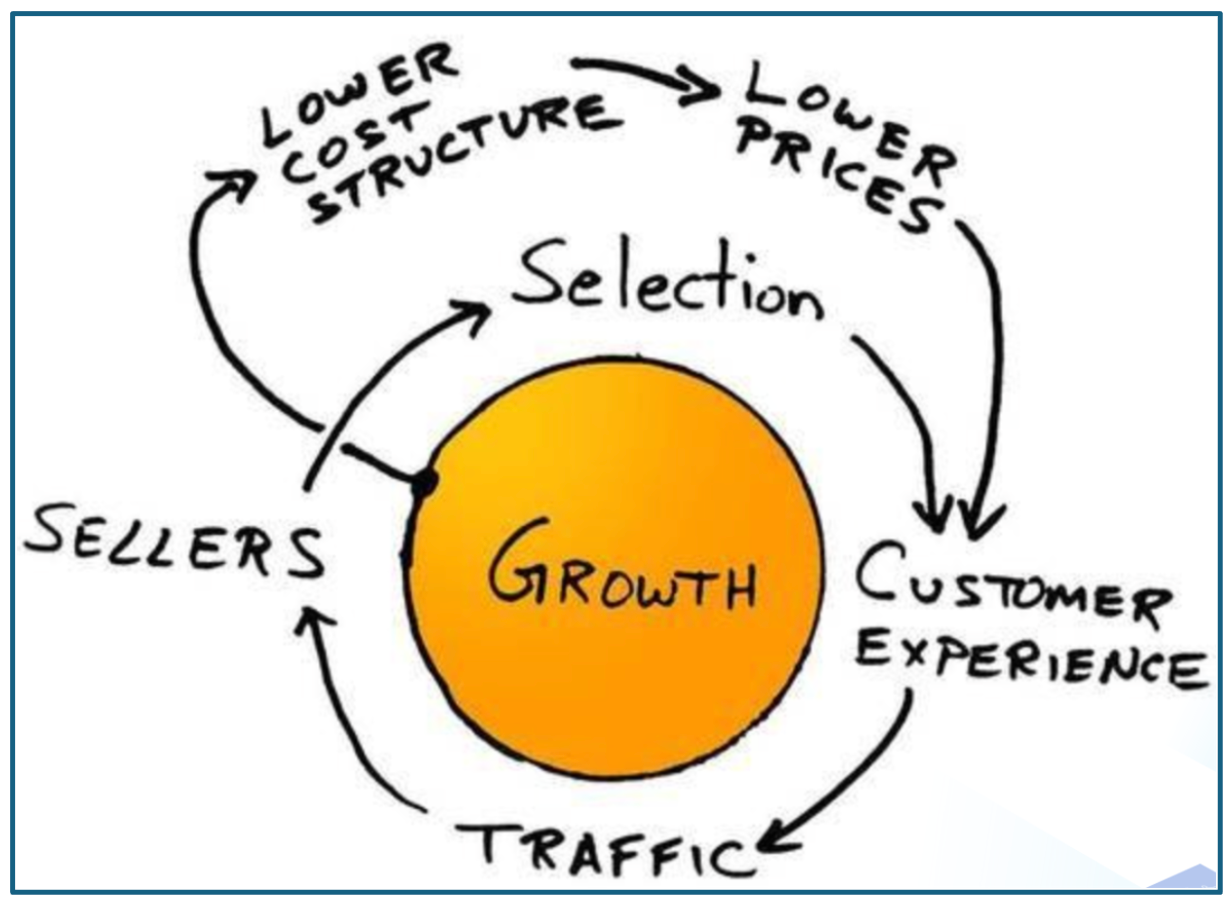
Amazon’s clever mix that was designed to align with consumers
The top reaction to Muse announcing a % of sale business model is “it’s over nobody will trust the agent because if you can pay more and the agent recommends you, then why would a consumer do that?”
Amazon looked at the Google ads and eBay’s v1 model and in both of those there is a misalignment with the shopper that goes like this. The merchant with the highest price has more margin and can afford more ads, so it’s a slippery slope to a forever degraded consumer experience because the shopper wants selection.
Amazon’s famous Bezos napkin flywheel diagram, has the customer experience right there. The Muse reaction makes one very bad assumption -that Meta/Facebook/Zuck are dumb. Instagram has ads and it’s a great experience, consumers vote with attention and with that KPI, there’s no arguing it’s popular and the ad load keeps going up. How’s that possible? The Ads add value.
What Amazon did is they said - how do we have ads, but not mess with that low price loop/CX in our flywheel?
They implemented a ‘price/quality’ gate: Once an offer was deemed to be the best for a particular SKU (what we popularized as ‘owning the buy box’), THEN that offer can be advertised. Then when the consumer shops for ‘hdmi cable’ or a category level search, they will only see SKU offers that own the buy box with ads on top of some to give them extra discovery juice.
The result: A balance between low price, quality merchant, high CX and ad revenue.
I imagine we’ll see something like this, in fact what’s convenient about product cards is you can almost do exactly the same thing, but it’s owning the Product Card, not the Buy Box. We’ll see, because there’s AI underneath, new models will be born that could be more sophisticated.
For example, a sophisticated merchant will pay more for a cart than an item, we should potentially be looking at % of margin vs. % of revenue. Looking further out, it seems like an economically rational merchant would pay more for a ‘net new’ customer transaction to acquire that customer and they may want to reward a very loyal customer. Imagine a very sophisticated ad system that projects CAC/LTV dynamics and that can be reflected in the economics.
Q4: Is anybody thinking about the consumer trust element — will Muse always work for the user, given Amazon is cheaper at least a third of the time?
From Bharad, in reference to this Muse piece→

This question is a cousin of Q3, but I included it because it’s a clear example of someone assuming:
Meta via Muse will do something dumb to screw up consumer trust - that’s 100% against their economic interests, so I don’t see it happening and as mentioned in Q3, charging $$ does not immediately ruin a CX.
Also, Meta doesn’t have the power to make Amazon join the program, it’s not their fault they don’t include that inventory, that’s Amazon’s choice to not be where the shopper is.
The question also implies that the consumer is going to buy something from Muse and then suddenly realize they could have saved $ on Amazon. Back in 2018, Kasey from Deloitte came on the Jason and Scot show (Episode 114 here) and introduced us to the concept of the ‘great bifurcation’. To this day, 8 years later I think it’s still a megatrend that’s still playing out. The TL;DR on it is:
****The Great Bifurcation Consumer Behavior Megatrend****
Consumers are splitting into two groups:
Convenience Oriented: They will happily trade off $ for time reduction - because in their mind time has a price and they will happily pay for it.
Value-oriented: They tend to value their time at 0, so will spend near infinite time looking for the best deal and take great joy in that.
You see this all the time. We all have that friend that drives 15mins each way and sits 30mins in the Costco gas line to save $.25/gallon. We also know those people that Doordash everything including a $5 Starbucks that takes $25 all-in to get delivered to them. Which one of these people is wrong? The answer is: neither.
There’s an economic principle that we have to use to illustrate this called opportunity cost, let’s use that to evaluate each of these scenarios to explain how they can both actually make rational economic sense.
First, for the gas example, let’s say the friend uses 1hr to save $5 on gas. What we don’t know is the friend’s opportunity cost. Maybe our friend is doing this after hours at say 7pm ET, so that hour isn’t missing a hard currency, but there’s still a cost and that cost is the alternative for that hour. Maybe they would be spending money in that hour or sleeping or watching TV or ‘doom scrolling’ - they will economically be ahead in this scenario (+ $5) vs. the alternative. If they are missing their son’s 5th birthday, that’s vastly different math, and so on.
On the Starbucks example, perhaps the person is an AI developer and is currently billing $200-300/hr - a 20-minute Starbucks run has an opportunity cost of about $67–$100. Paying an extra $20 for delivery still leaves them about $47–$80 ahead.
Bringing it back to Q4: “once they realize Amazon is cheaper, won’t they lose trust?”
First, I assume with estimated 100m Prime households in the US, nearly 100% of people are aware of Amazon and half the households have Prime.
If a convenience-oriented person buys with Muse, Muse is very transparent in my shopping about what it’s looking at and not - and I can see Amazon isn’t in the list, but maybe I don’t care because I’m busy and want it to handle the discovery for me and, heck, handle the final piece so I don’t have to waste time looking everywhere. I want it off my list fast and I pay $2 more or it takes 2 days extra, for many items that’s not the priority convenience is.
Every value-oriented consumer, by their very nature, will be acutely aware that Muse doesn’t include Amazon- in fact they are probably using Muse to price check, look for promo codes, etc. That’s one of Muse’s best use-cases - it saved me $40 on shoes the other day that weren’t even on Amazon because it’s a brand that has refused to sell 1P/3P on Amazon.
Conclusion: Shoppers are smart and will make economic decisions for themselves: convenience-oriented people will trust Muse because it saved them time, value-oriented will use it to price check vs. Amazon and only use it if it’s cheaper - they will be happy - everyone has a choice, when they make that choice they will be happy because they made it for a reason.
If Muse screws that up, nobody will go there, they will fail, Meta has a history and 4-6 properties over 1b MAUs to show they aren’t in the biz of shooting themselves purposely in the foot.
Q5: Will the costs of AI infrastructure start to erode value in the presentation layer?
From Theo, in reference to a substack thread on Google/Amazon beating expectations and share prices dropping — Nov 3
Hey Theo, thanks for the question. I think what you are asking is, “if these models keep getting more and more expensive to build (train) and host (inference), will that make it hard for the economics to work?”
This question ‘pairs’ nicely with the Visa data - look at how far those models have come so fast - one year. By this time next year, the models will be able to shop and checkout on every site that doesn’t block them. By end of 2028, the late 2027 expensive models will slide down the Pareto Frontier curve (capability the same, costs come down) and so on.
The one fly in the ointment is the political orientation towards limiting and banning datacenters with some super far left politicians calling for a complete ban on AI. If we as an industry can’t build more datacenters or AI becomes basically illegal, then all bets are off. If any of that (DC slowdown→ AI Ban) happens, here’s what my Magic 8-ball of Agentic Commerce Predictions says:
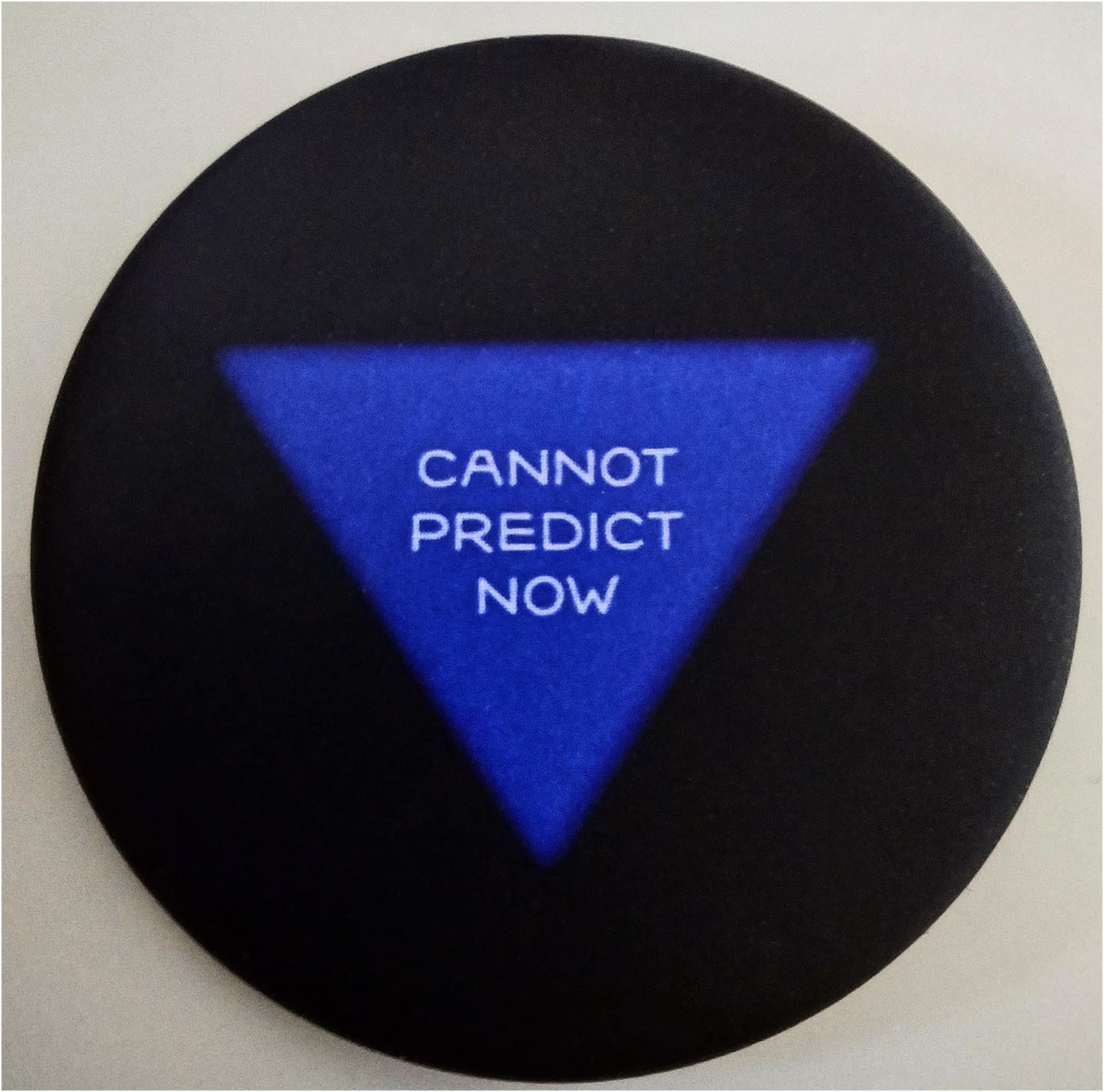
Brand/Retailer Oriented Questions
We’re in a bit of a perfect storm here in November - most merchants are reviewing their Q3 data and seeing some wacky data:
External searches (Google SEO/SEM) continue to rapidly slide
Conversions on-site down - consumers are entering search terms the old search can’t handle
Bot traffic > consumer traffic - this is causing all kinds of analytics chaos
The tipping point we’ve talked about from the Q3 Amazon and Google results is being felt in the iceberg part of our world - the vast surface area under the water.
Timing-wise, we’re now only 16 days from Thanksgiving and 45 days from Christmas, we are getting calls from brands and retailers alike that fall into two buckets - one urgent, one more 2027 looking→
Q1: What are the top things I can do between now and Christmas to convert some of this Agentic Traffic/Activity that is surging all of a sudden?
I’m going to keep this one short because we’ve covered all these in detail in these pages. The biggest things you can do in order of impact:
Stop blocking bots - Many retailers we run into are blocking friendly shopper bots and don’t realize it. Their IT team or infrastructure layer have defaulted to ‘all bots bad’ and blocked them on your behalf. We have seen increasingly aggressive activity here where we had one retailer where we are 100% sure they are also blocking a large % of human traffic.
(Retailers only) Send ChatGPT a feed - This is the single highest impact action you can take quickly and it will have an immediate (3 days or less) increase in sales. We have enough data now I can say this unequivocally. Bonus points for some basic speedy enrichment work here.
(Brands) Upgrade PDP Page - This is super counter-intuitive for brands, but your lowly, vestigial PDP pages, even without transactions, have a ton of weight in the ‘mind’ of LLMs. If you take time to make sure all the basics are super clear in your meta data (ingredients, pairings, allergens, kosher status, gluten status, lactose status, etc.) this will make a huge improvement across EVERY agentic commerce surface, even Amazon AFS and Walmart Sparky. I realize this is hard to believe, we can prove it to you. Again, I can say this one unequivocally now - 100% a top priority high impact, almost zero cost thing you can do.
Product Catalog Upscaling (aka enrichment) - This is overwhelming, I get it. Remember, we are NOT changing the human readable PDP. To narrow down the problem, do this:
Sort your SKUs by sales rank from highest to lowest
Pick a % - recommend 10%, 5% if that’s too much and just start with those to show ROI
Enrich them to what we call level 3. Level 1 isn’t enough, you need to get at least into the conversational attributes and shopper context. This includes reviews and a basic FAQ from a first round search for shopper context.
Example: You have 20k SKUs and this project feels insurmountable and you pitched management a $500k budget and they 🤮 all over that.
Take 5% - that’s 1000, manually approve the first 100 to get a feel, then come up with rules for auto-enrichment. Publish the first 1000 and measure that for 30/60/90 - you will then have a very clear ROI case to do the others and add more resources. This solves the chicken-and-egg problem as well as getting you to an ROI fast and also having the highest impact (you’d rather your top 1000 sellers have an X% bump in sales than your lowest sellers).
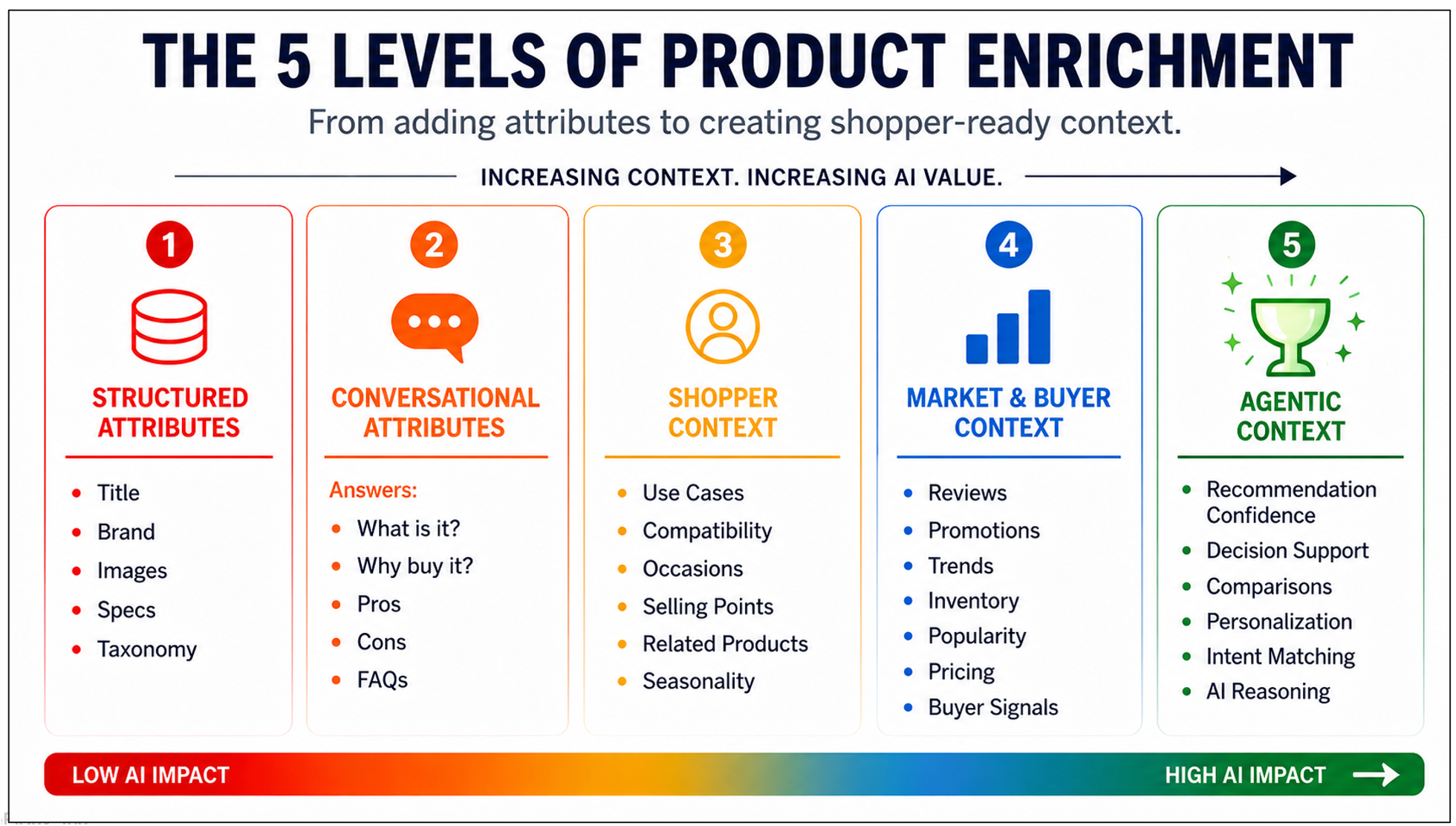
Learn more about Product Catalog Upscaling here→

Q2: I’m in my 2027 Budget Planning - how should I budget for Agentic Commerce?
This one can go long, but you’ll notice it dovetails nicely with the answer above - I would say at a minimum what you want to do is start with these initiatives:
Brand:
Don’t block bots (free!)
Upscale your PDPs (very low cost and can be automated - it’s meta data not human data!!!)
Level 3 enrichment on your PDPs and pushed/avail to your retail partners (it’s meta data not human readable!) This is where the expense is at a team time level.
AI shelf monitoring - Also expensive in team time.
Retailer:
Don’t block bots (free!)
Agentic Commerce optimized datafeeds to ChatGPT, Google Gemini, Copilot
Level 3 enrichment on your catalog (not human readable!)
Upscale your PDPs (not human readable!)
ACO Monitoring
If your budget cycle looks at ROI, that’s a longer story and so variable that it’s hard. Perhaps once through the holiday crazy, we’ll look at ‘the ROI of Agentic Commerce’ - We actually have a very detailed model, it’s not what I’d call substack ready, but if you are interested, ping me and I can walk you through it and send it over.
We also have lots of resources on how to execute this. Our most popular started here in strategic question 1→

This one FAQ generated so many follow-ups we created this guide called ‘Building your ACO organization’.
It lives here.
The top trend we’re seeing on this topic of organizing for ACO - create a TIGER team that has the remit to just go knock this out.
Misc: 2 Shopify Questions and Our Most Common Pitch
Q1: Shopify’s Agentic page credits real sales to ChatGPT — have you seen other platforms give sellers a view like that yet?
From Sam referring to this news roundup where we showed more about this Shopify feature→

Sam - thanks for the question. At the SMB platform level, this is necessary because SMBs can’t patch together their analytics, infrastructure layer, tracking, etc. Most larger retailers and brands are very good at this and have 20yrs of perfecting it with all kinds of attribution models and what-not.
With that background in mind, and I’ll say that focusing in and understanding Agentic Commerce at the level I do, leaves me a blind spot on the platform layer that folks like my friend Rick Watson cover more deeply. That being said based on what I know:
Shopify - gold standard on this tracking
BigCommerce - no idea, they seem to be struggling, so I doubt there is a lot of innovation going on there. My bet is YOYO - You’re On Your Own.
Magento - Also struggling, YOYO.
Salesforce - YOYO - most customers use GA4 or Adobe
CommerceTools - same
SAP Hybris - Same
If anyone knows more or wants to correct me on this, LMK.
A new rebel emerges
There is a new challenger to Shopify that’s coming up in a lot of conversations that I need to learn more about and want to have on the podcast (reach out please!)
It’s called Scayle and customers are raving about the AI capabilities and back-end agentic layers and we're seeing them win some big deals against Shopify.

Beware DACT!
That all being said, we’re seeing large retailers and brands are now tracking a lot more of these Agentic Commerce traffic and sales signals, but Dark Agentic Commerce Traffic is still a problem, this has to get fixed next year and I have faith that it will because ads won’t work without it. More on that topic→

Q2: I’m increasingly hearing that the relationship between Shopify and Stripe is strained and Shopify is looking at alternatives to Stripe for the Shop Pay Infrastructure - do you think Shopify and Stripe will ‘break up’?
This is a long one, here’s my shortest answer. Let’s start looking at the stakes best represented by market cap→
Shopify: ~$200b
Stripe: $160b (rumored as they are private)
PayPal: $50b
I believe if Stripe was public, their valuation would be north of that $160b, especially after the acquisition of OpenRouter and all their smart Agentic Commerce moves.
I mention this because it takes a lot of things off the table - these companies are too large for one to buy the other or to merge. PayPal is very buyable and in fact, it was rumored Stripe took a run at them. I mention that because Braintree would be a fast way for Shopify to replace and compete directly with Stripe.
All that being said, it’s well known in the tech founder circles that Tobi, the Collison brothers and DHH are BFFs and spend a lot of time hanging out drinking Guinness, racing cars, talking tech, nerding out, etc. (Examples here and here and here ).
That’s a long way of saying I don’t see it happening.
But as a thought exercise, here’s my 2 best shots at how it could happen:
Scenario 1: Shopify is tilted at Stripe implementing Link, and now Link pay that is a lot like Shop Pay one step checkout. They decide - why are we built on a company competing with us - let’s go control our own destiny - DIY or buy PayPal. They could also want more economics in payments and Stripe has to be making some margin - Stripe’s margin is Shopify’s opportunity. This could also happen if Shopify is under margin or growth pressure.
Scenario 2: We know that Shopify is unbundling Shop Pay as a stand alone service. It’s going to naturally compete with Stripe/Link. Let’s say Shopify starts winning deals and Stripe starts to feel pain (in the form of slowing growth in revs/TPV). Shop Pay is one of the biggest honeypots of payment revenue available. In a world where growth is tough and there’s a competitive situation, perhaps Stripe goes for that honey pot. It starts by rug pulling (cancelling deal or raising prices) the Shopify deal and starts promoting Link or some variation into the Shopify store network as a cheaper/better/alternative payment mechanism - “Go direct to stripe and save X% per transaction!”
What feels wrong about that thought exercise is neither one feels like a slam dunk win for Shopify and Stripe, there’s less risk and more up-side staying in the symbiotic relationship than breaking it - at least today. The thing about disruption like that being caused by AI is it can create rapid seismic shifts and maybe one of those tilts things towards a break-up, but I don’t see it today.
Observation: Pitches
As part of this exercise, for the first time, we forensically went through all the inboxes and messaging platforms to gather these questions. One unanticipated outcome - we noticed that every week at least 2 founders reach out and describe themselves as building “the decision layer” or “trust layer” or “authentication layer” for agentic commerce and want to come on the pod.
You haven’t seen them on the pod because they are all at the idea level, no customers, maybe a demo and ‘product’, but because these sit in the middle, you need two sides of the equation - supply and demand and maybe three - payment partners. It’s going to be hard being a startup wedged between the billion and trillion dollar behemoths fighting over the Agentic Commerce pot of gold: Shopify, Stripe, Google, SpaceX, ChatGPT, Anthropic, Meta, Amazon, Walmart, Visa, Mastercard, Amex, WorldPay and so on.
That being said, these are smart people that see a need and it’s a reminder that while we’ve come a long way as an industry, there’s still a lot that needs to get solved to reach that transactional tipping point mentioned way back in Question 2 at the top of this article.
Editorial Note
We’re entering the Thanksgiving holiday season here in the US, we’re going to be pausing the Tuesday pieces until after Thanksgiving because I’ll be traveling to some shows and Thanksgiving plus I do expect we’ll have a lot of news before and just after Thanksgiving, so from November 11-December 4 our publishing schedule will be a bit erratic compared to normal. We’ll do our best not to bury your inbox, but we can’t control what’s coming!
Hi Scot, great idea. A question for a future round: for a small brand on both Amazon and Shopify, which agent surface should it get ready for first this holiday?
Q4 is the one I'd lose sleep over. An agent that quietly skips the cheaper option only gets caught once. After that, the human starts double-checking everything.